

Application
Showcase
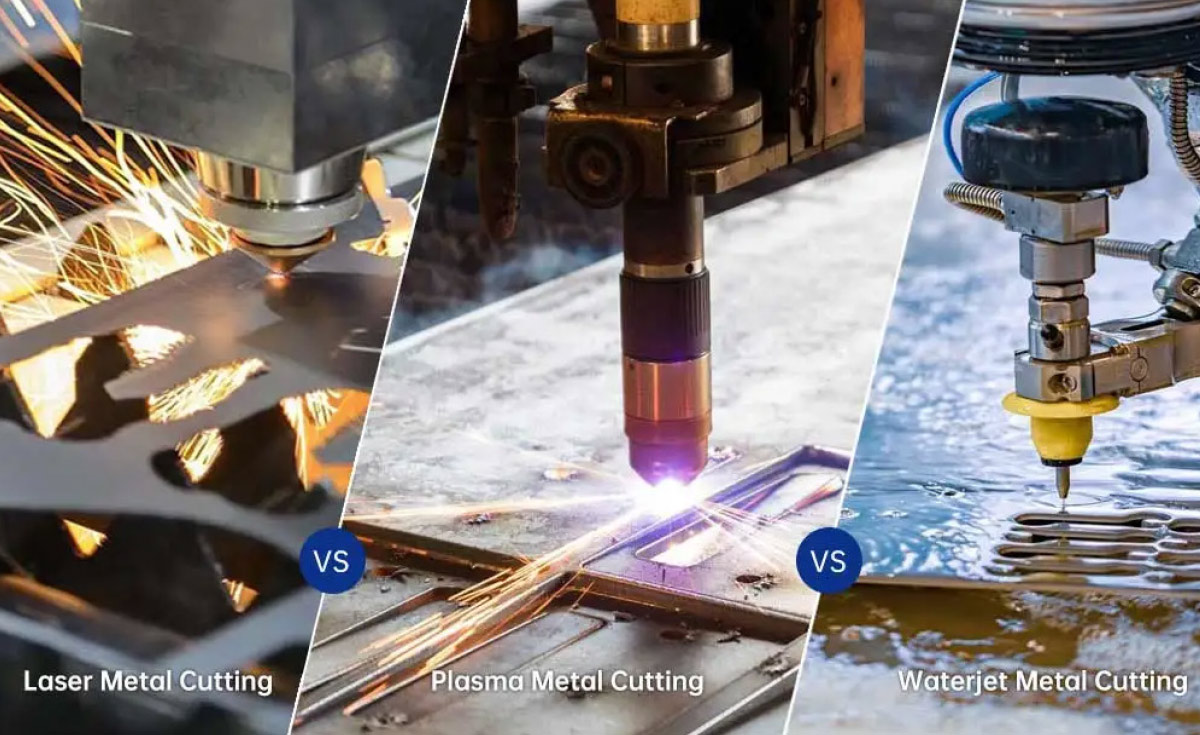
abrication shops working with mixed materials often face limitations when using hot-cutting methods such as laser and plasma systems. While those technologies are effective for high-volume production of conductive metals such as steel and aluminum, they can create heat-affected zones, or HAZ, that alter material properties, cause distortion and increase the need for secondary finishing or stress relief. Those challenges become more significant when cutting plastics, composites, laminates and heat-sensitive alloys.
Cold-cutting methods remove material without introducing thermal stress. Mechanical machining and waterjet cutting both fall into this category. Among those options, waterjet technology offers broad versatility for manufacturers that need to process multiple materials while protecting part quality.
The Tekni Cut Up J G waterjet system is designed to combine high cutting power with precision for large metal sheets and a wide range of other materials. Using ultra-high-pressure water, often with abrasive media, waterjet systems can cut metals, engineered plastics, rubber, glass, stone and composites across varying thicknesses while maintaining dimensional stability and edge quality.
Tekni Waterjet systems powered by the Quantum NXT pump are built for consistent performance in production environments where uptime matters. They deliver stable pressure and repeatable cutting results across both metal and nonmetal materials. For shops already operating CNC mills, routers or laser systems, a Tekni waterjet can expand cutting capacity and material flexibility while protecting part quality on jobs where thermal distortion is a concern.
As manufacturers continue to work with advanced polymers, composites and hybrid assemblies, cold-cutting processes such as waterjet cutting provide a practical way to maintain precision, preserve material integrity and improve production efficiency.
To read the full article, visit: www.biesse.com/us/en/cold-cutting-vs-hot-cutting
VC pressure pipe is used in potable water systems when resistance to permeation by organic compounds is an important design consideration. Permeation is the migration of chemical compounds through a pipe wall that is in contact with contaminated soil or groundwater, which can affect water quality.
Independent research dating to the 1970s has found that PVC pipe resists hydrocarbons and organic compounds because of its dense molecular structure. Studies have reported that PVC is impermeable to gasoline and gasoline-saturated solutions, as well as benzene, toluene and trichloroethylene, or TCE, at concentrations commonly encountered in field conditions.
The Water Research Foundation has reported that PVC pipe remained impervious to premium gasoline and gasoline-saturated water during extended exposure testing and can be used in soils contaminated with gasoline. EPA materials have similarly stated that PVC pipe remains impermeable to fuels and solvents in contaminated soils. Field investigations by utilities have also reported no permeation-related failures after decades of service.
While PVC pipe walls are resistant to permeation, gasket selection remains an important design consideration. Studies indicate that properly selected styrene-butadiene rubber, or SBR, and nitrile-butadiene rubber, or NBR, gasket materials show low susceptibility to permeation when installed according to design guidance.
PVC pressure pipe continues to be used in applications where soil or groundwater contamination is present and long-term material performance is required.
To read the original technical brief, visit: https://www.uni-bell.org/Portals/0/ResourceFile/pvc-pipe-resistant-to-permeation-by-organic-compounds.pdf
rimex has introduced Prime Sulapac, a bio-based wood composite sheet for thermoformed packaging applications. The company says the material is designed as an alternative to conventional plastics used in inserts, trays, blister cards and point-of-sale packaging.
According to Primex, Prime Sulapac can be processed at lower thermoforming temperatures than many traditional plastics, which may reduce heating time and support energy savings of up to 20%. The company also says the material offers a broader processing window than some bio-based alternatives, helping support production efficiency.
Primex describes Prime Sulapac as bio-based, industrially compostable and recyclable by design. The material is available in thicknesses from 0.015 to 0.060 inches and widths up to 47.5 inches, with tan and darker natural-tone options and a smooth surface finish.
For more information visit https://www.primexplastics.com/blog/2025/05/14/primex-introduces-prime-sulapac