

SpecialFocus
Beyond Corrosion:
Thermoplastics for Ultra-Pure, High-Performance Applications
aterials determine purity and uptime. Often, the limiting factors in modern industrial processes stem from limited awareness of available materials and their capabilities. Even carefully specified metals can fail under certain conditions. For that reason, designers often turn to experts in alternative materials to compare performance and choose the best fit for the process.
When properly selected and joined, thermoplastics provide corrosion resistance and very low extractables, helping reduce ion, particle and total organic carbon contributions that are critical in semiconductors, life sciences water systems and advanced battery manufacturing. They are commonly grouped into three tiers based on cost and performance.
Base tier: Polyolefins in demanding environments
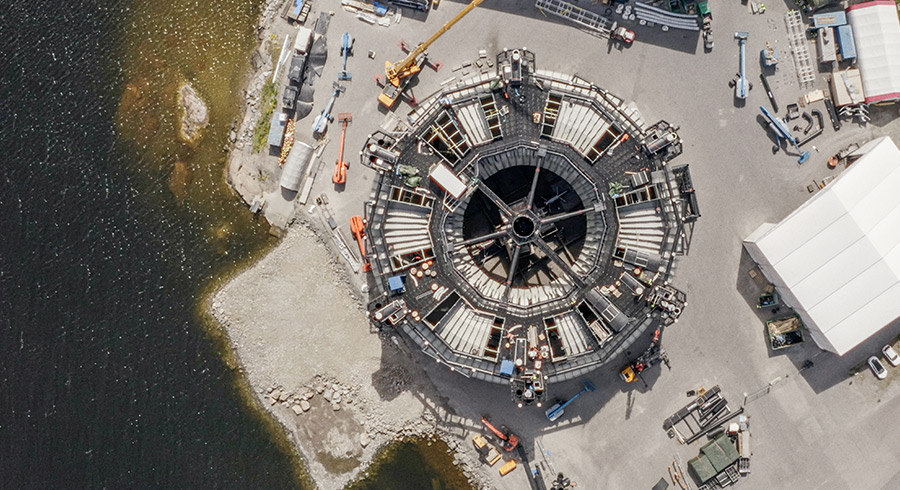
One example is a closed, floating salmon farming installation built in Norway. The structure had to meet demanding requirements, including corrosion resistance, structural strength, and the ability to withstand seawater, fouling and dynamic marine loads. Fish welfare and environmental performance also played a role in selecting PE sheet for the build.
PE was a strong fit for this application. Seawater, caustics and oxidants can quickly degrade metals, while PE and PP offer excellent corrosion resistance, lower maintenance needs and simpler construction. Oxidizing biocides such as sodium hypochlorite can attack stainless steel, causing pitting and stress-corrosion cracking in 304 and 316 alloys. Polyolefins are far more resistant in these conditions.
To fabricate the structure, the project used about 600 tons of PE components, including sheet and piping with outside diameters up to 1,200 mm. Stiffening ribs formed the primary framework, and curved sheets were butt-welded into place. The final geometry, optimized through finite element analysis, delivered a high strength-to-weight ratio and strong resistance to seawater corrosion. When completed, the structure became the world’s largest thermoplastic installation at 55 meters in diameter, more than 17 meters tall, and enclosing 22,000 cubic meters.
Mid tier: PVDF and ECTFE in aggressive chemical service
Temperature requirements drove material selection. ECTFE provided the necessary short-term operating range of 140 to 150 degrees Celsius and chemical resistance across a pH range of 1 to 14. Barrier performance and abrasion resistance added to its value, while its smooth surface helped resist fouling in hot, oxidizing acid fumes.
A dual-laminate construction addressed the challenges systematically. A fabric-backed ECTFE sheet served as the chemical barrier, while FRP provided the mechanical strength needed for safe operation under vacuum and kept metal supports out of direct contact with the corrosive flue gas.
The completed stack stood 60 meters tall and was built without exotic metal alloys or glass-lined alternatives.
Top tier: PFA and FEP for ultra-high-purity service
A semiconductor facility in the northeastern United States required ultra-high-purity chemical storage for six tanks containing sulfuric acid, hydrogen peroxide, potassium carbonate, nitric acid, ammonia and hydrofluoric acid. Process conditions reached 50 degrees Celsius, and purity requirements were extremely strict, with ionic and metallic control at the parts-per-billion to parts-per-trillion level.
PFA was well suited to the application. As a fully fluorinated material with ultra-low leachable content, it aligns with the expectations of SEMI F57, the global standard for ultra-high-purity polymer components that addresses metallic, ionic and total organic carbon contributions in ultrapure water and wet-process chemistries. These materials can meet those requirements while maintaining continuous service up to 260 degrees Celsius.
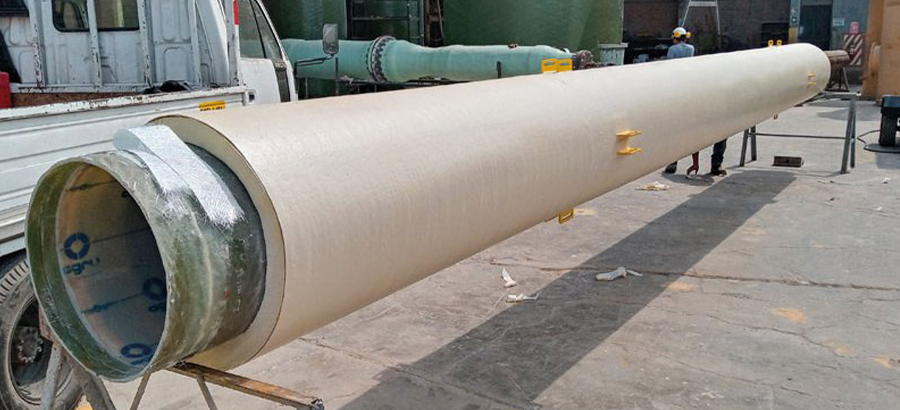
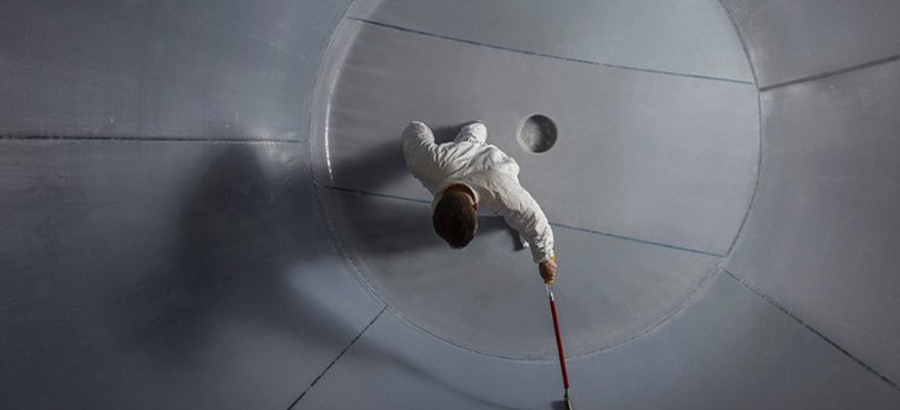
Each of the six tanks measured 3 meters in diameter. Together, they met the facility’s ultra-high-purity storage requirements without the contamination risks associated with metallic construction.
The same logic applies to sustainability. Lower chemical cleaning demand and longer service life in corrosive applications can reduce the environmental footprint of thermoplastic systems. When end-of-life considerations matter, many fabricators also support reuse or take-back programs for clean, single-material components.
Corrosion resistance has long been the baseline requirement. Today, the more important question is which material best protects purity, maximizes yield and keeps production running. The three-tier thermoplastic framework of PE and PP, PVDF and ECTFE, and PFA and FEP gives engineers a clear, structured way to match chemistry, temperature and purity requirements. These case studies show that in the most demanding corrosive and ultra-pure environments, thermoplastics are not simply an alternative to metal. In many cases, they are the better solution.