

Performance Plastics in the Food Industry and the Push for Recycled Content
by Mick Fisher, CartierWilson LLC
n the modern food and beverage industry, the shift toward performance plastics such as sheets, rods and tubing is driven by a combination of operational efficiency, food safety and environmental stewardship. Manufacturers in this high-speed sector face increasing pressure to improve environmental, social and governance performance while complying with some of the most stringent safety regulations governing material selection.
Although sustainability is often associated with recycling, the use of virgin-grade performance plastics in food processing equipment provides significant long-term sustainability advantages that recycled materials cannot yet consistently match. While pathways exist for incorporating recycled content into food applications, regulatory compliance remains challenging because of strict standards established by organizations including the U.S. Food and Drug Administration, NSF International and European regulatory authorities.
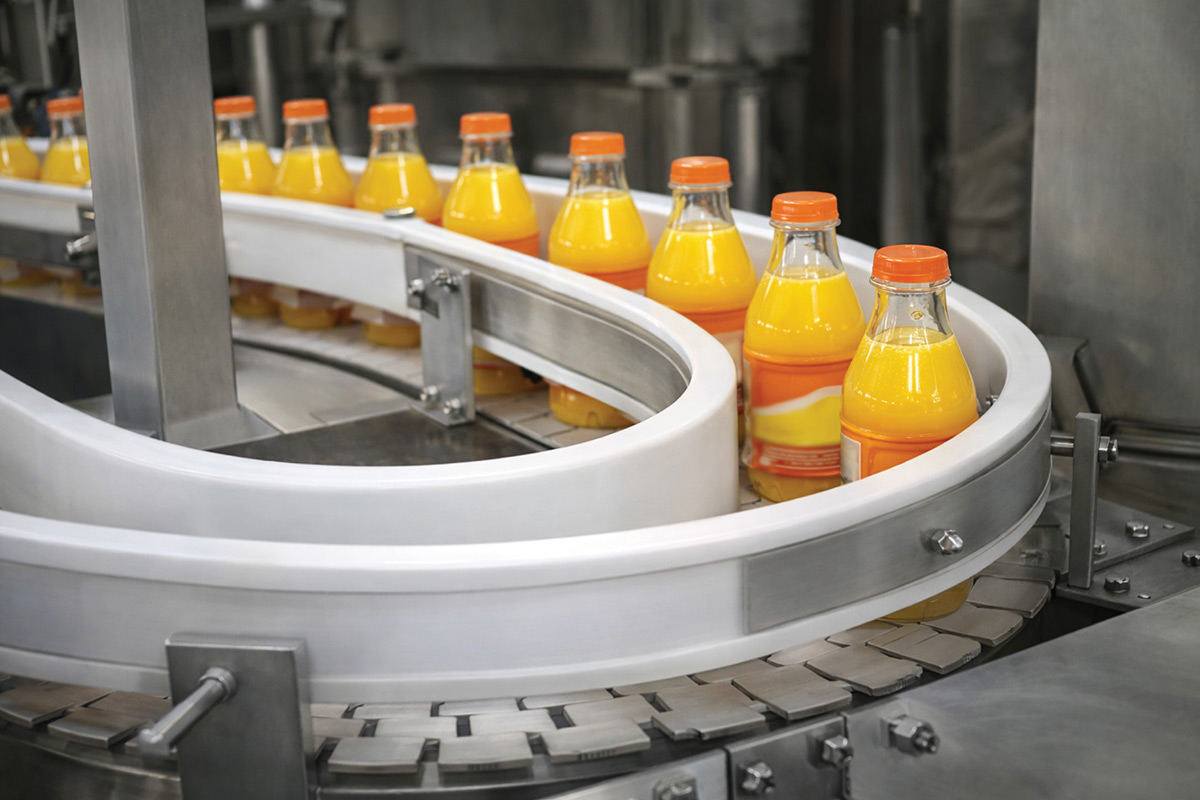
Lightweight construction: Performance plastics may weigh up to 85% less than comparable steel components. The reduced mass allows motors to operate more efficiently when driving conveyor belts, rollers and gears, lowering overall energy use and reducing a facility’s carbon footprint.
Self-lubrication: Many food-grade plastics exhibit inherent lubricity. This characteristic reduces or eliminates the need for petroleum-based greases that can create residue buildup and require aggressive cleaning processes. Reduced use of lubricants and degreasers lowers water consumption and minimizes wastewater treatment loads.
Noise reduction: Plastics absorb vibration and reduce operational noise levels. Lower noise levels can improve workplace conditions and contribute to the social component of environmental, social and governance performance by enhancing worker safety and comfort.
Corrosion resistance: Unlike metals, performance plastics do not rust or pit when exposed to acidic or alkaline cleaning chemicals used in clean-in-place systems. This resistance helps extend component life and reduces the frequency of part replacement.
Low friction and high wear resistance: Components such as bushings, wear strips and guide rails manufactured from high-performance plastic rods and tubes often outlast comparable metal parts. Longer service intervals reduce maintenance downtime and limit material waste.
Regulations also limit contamination levels. Allowances for controlled contamination of 0.5 parts per billion make it extremely difficult for mechanically recycled materials to consistently meet certification requirements for food-contact applications.
The FDA offers a voluntary review pathway for recycled materials through the issuance of “no objection letters.” However, the strict purity requirements outlined in 21 CFR 174.5 and the polymer specifications in 21 CFR 177 have historically resulted in the widespread use of virgin-grade materials in industrial food processing applications.
As a result, mandates requiring recycled content in plastics used in food and beverage contact applications have often been difficult to achieve within existing regulatory frameworks.

Unlike mechanical recycling, which involves shredding and remelting plastic materials, advanced recycling processes break polymers down into their original chemical building blocks, known as monomers.
The resulting materials can be chemically identical to virgin resin produced from fossil feedstocks. Because contaminants are removed at the molecular level, these materials are increasingly receiving regulatory clearance for food-contact applications in the United States and Europe.
In the coming years, manufacturers may see sheets, rods and tubing produced from recycled feedstocks that meet the same purity and performance standards as virgin-grade materials.
Under this method, recycled or renewable feedstocks are combined with conventional fossil-based inputs during production. Although it is not possible to trace a specific molecule through the entire manufacturing process, certification ensures that the quantity of recycled material introduced into the system matches the amount claimed in final products.
This framework allows manufacturers and food processors to report measurable recycled content while maintaining materials that meet strict safety standards for regulated applications.
Definition of recycled content: Some organizations question whether materials produced through advanced recycling should qualify as recycled content because the final polymer is chemically indistinguishable from virgin resin.
Regulatory classification of facilities: In some cases, advanced recycling facilities are classified as solid-waste incineration plants under the Clean Air Act rather than manufacturing operations. This classification can impose stricter emissions requirements and increase regulatory costs.
State-level inconsistencies: Only about half of U.S. states currently recognize advanced recycling facilities as manufacturing operations. This inconsistency can discourage investment and slow technology adoption.
Mass balance transparency: Wider acceptance of this accounting method is needed to provide clear, science-based verification of recycled-content claims.
Feedstock supply: Both mechanical and advanced recycling depend on consistent supplies of recoverable plastic materials. Establishing reliable collection systems remains a critical challenge.
The bill was referred to committee in late 2025 and received industry coalition support in early 2026. It has since been referred to an environmental subcommittee and is being considered alongside updates to the Toxic Substances Control Act intended to streamline approval processes for new chemical recycling technologies.
By converting plastic waste into high-purity chemical feedstocks, advanced recycling may allow manufacturers to incorporate recycled content into regulated applications without sacrificing performance or safety.
Key priorities include scaling production beyond pilot projects, developing policies that recognize molecular recycling and mass balance accounting, and strengthening industry collaboration to improve collection systems and feedstock availability.
Through these efforts, the performance plastics industry can continue to support safe and efficient food production while advancing measurable sustainability goals.