

SLA vs. Traditional Plastic Processes
njection molding remains the standard for end-use plastic parts, delivering tight tolerances, strong surface quality and dependable long-term performance. But many product teams move to tooling before fully validating part geometry, aesthetics and function. In those cases, stereolithography, or SLA, can serve as a valuable bridge, helping teams refine designs before committing to molds.
SLA is design-driven. It allows teams to convert digital files into physical parts with minimal setup and minimal penalty for design changes. That makes it especially useful when a product is still evolving, when geometry is complex or when the cost of learning through tooling is too high.
Those strengths come with tradeoffs. Tooling can take months to complete and requires significant upfront investment.
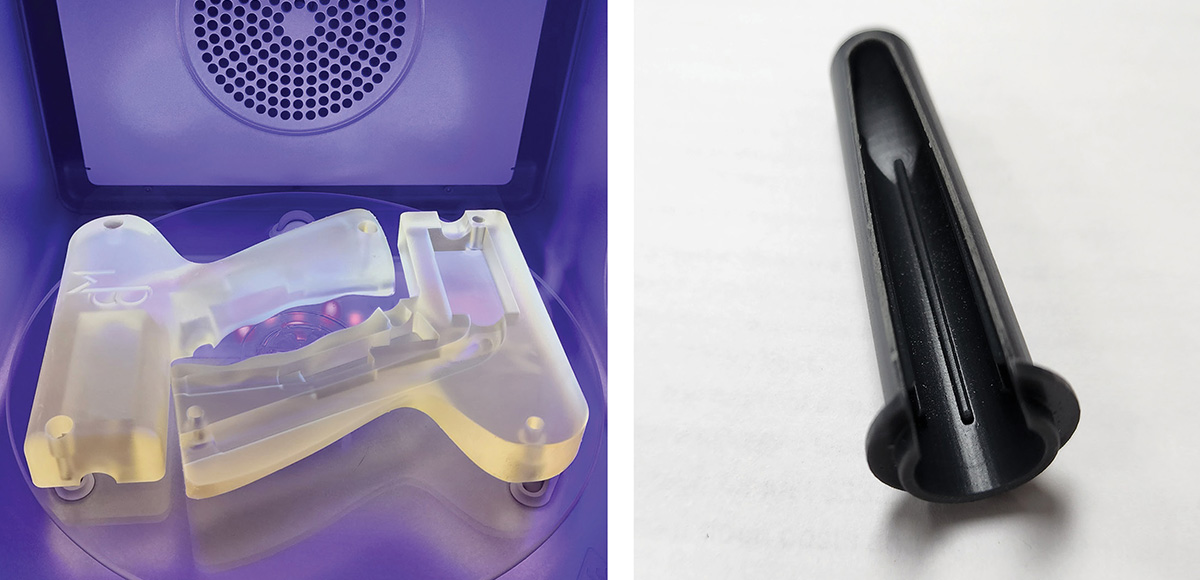
Its value is most apparent in four areas.
First, it supports functional validation. Teams can test parts that more closely resemble production intent than many other prototypes.
Second, it improves cosmetic and user testing. Smooth surfaces and crisp details make SLA parts well suited for design reviews and evaluations.
Third, it can support bridge production. For products with uncertain demand or evolving designs, early- to mid-volume production often does not justify tooling.
Fourth, it enables geometry that would be difficult or inefficient to mold. Internal channels, complex features and highly customized configurations may be possible in SLA without the added costs.
Still, modern SLA materials have improved significantly. Many now approximate the qualities product teams care about most, including stiffness, toughness, flexibility, heat resistance and electrostatic discharge protection.