

POLYCARBONATE SHEET USES IN AGRICULTURE BUILDINGS
griculture presents many opportunities for selling polycarbonate (PC) sheets. Polycarbonate has many desirable characteristics that make it an excellent choice to be used as coverings on roofs and sidewalls; for flower and vegetation growth as well as livestock coverings and stalls. It has outstanding light transmission, high impact strength, excellent UV protection and flame resistance. It is also lightweight, virtually unbreakable and available in a variety of colors, opacity and diffusion options.
Before the advent of polycarbonate in the United States, greenhouses and other agricultural buildings relied on glass and polyethylene film for coverings; both of which came with a downside. Glass was heavy, expensive and subject to breakage from hail and wind-borne debris, while polyethylene (PE) film was not rigid enough and required replacement every two to three years. Polycarbonate sheets resolved all these issues and are available in multiwall, corrugated and solid sheets.
The light specturm
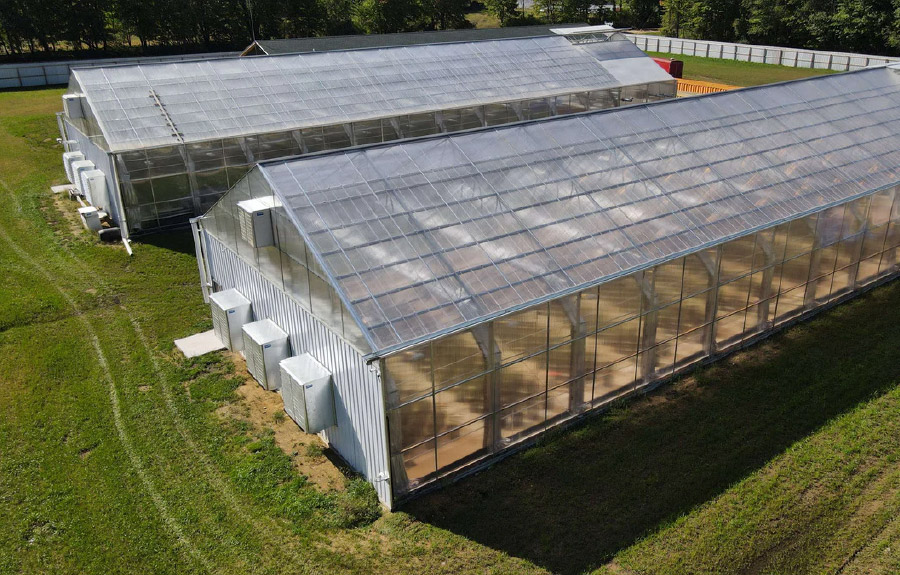
Gallina USA LLC.’s 8mm Clear Policarb system works as an excellent roof and wall system in agricultural greenhouses.
Building construction applications
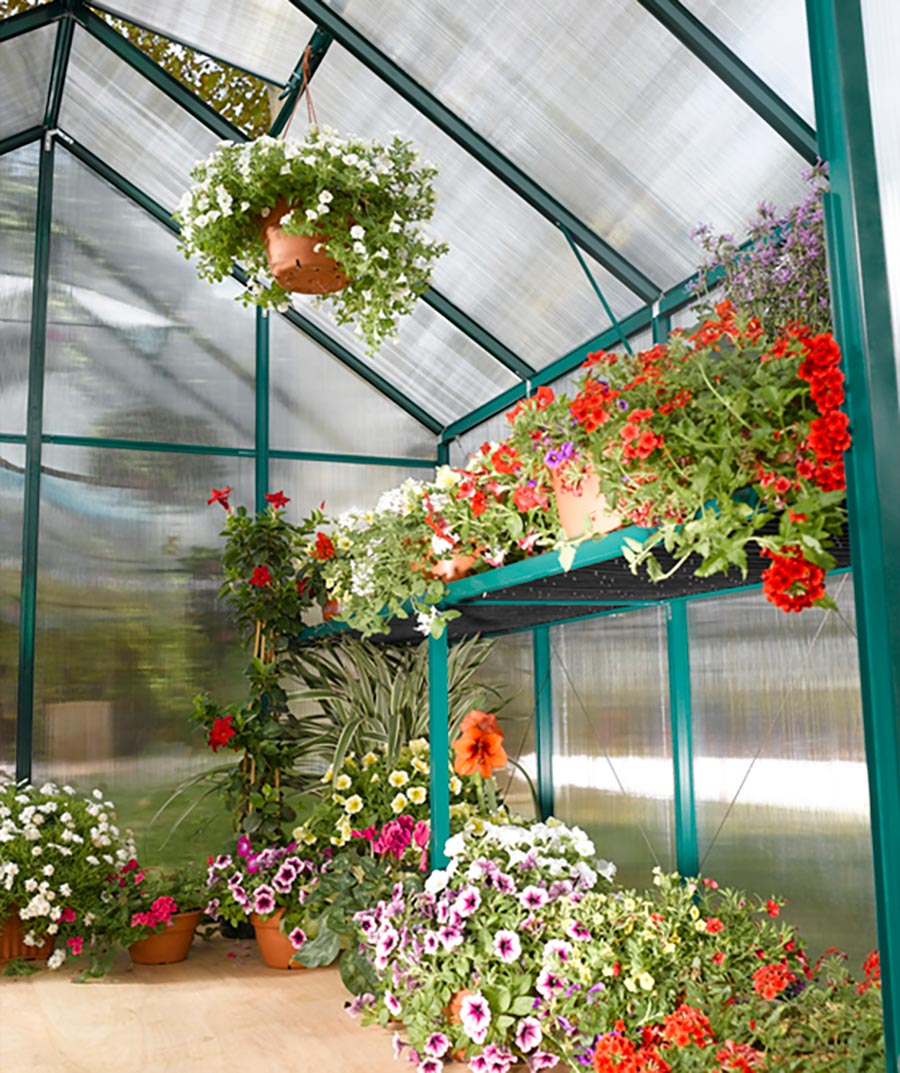
Polycarbonate sheets are a strong and durable option for retail nurseries. Photo by Gallina USA LLC.
Typically, the greenhouse manufacturing and grower (agricultural farming) section of the markets will consider polycarbonate in a variety of areas on their new buildings. In the case of growers, they will utilize polycarbonate when replacing their current coverings on their existing buildings. This is a segment of the market that many plastic distributors are not getting involved in but should. The growers’ market is ripe for upselling as many of their buildings are using film or outdated coverings and they will consider the new option of multiwall or corrugated sheets that are available some desirable advantages.
Polycarbonate products may vary based on location and growing application. Roofing applications typically consider 8 mm multiwall sheets in much of the United States, but in places like Colorado or some areas in Canada, 16 m multiwall sheets are used due to snow loads and colder temperatures. Warmer or mild climates will frequently use monolithic corrugated sheets or PE films. Side wall and front of building applications may vary from what is used on the roof as well. A greenhouse customer may use corrugated on the roof and 8 mm on the walls. If the greenhouse is located at a public nursery or grower location with a lot of activity, you may see solid sheet PC being used in the entrance areas. Frequently, this is for visibility reasons if the nursery is open to the public. It also provides greater impact resistance, as shoppers will be entering and exiting with their nursery carts.
Trends in polycarbonate product selection
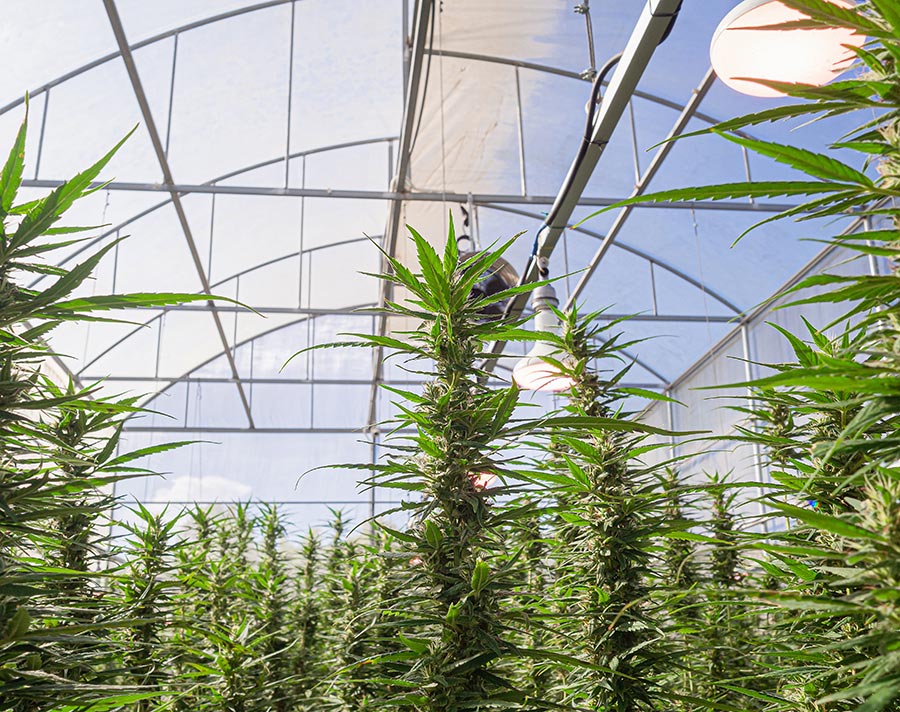
The cannabis industry has created tremendous growth for the greenhouse manufacturing sector. While this growth is welcome, much of it has been poorly regulated by the United States, resulting in overgrowing which, in turn, has driven down pricing for the crop. In addition, some areas have seen plans for greenhouse growth come to a screeching halt. That being said, the industry grows its crop in a highly technical manner. The days of growing outside or in a makeshift greenhouse are gone, for the most part. Hi-tech lighting and heating designed to control how the plant grows are employed, changing what material is used to cover these buildings. For those that grow in light on/light off scenarios, sheet coverings that have 0% light transmission are required. They may also use white PVC panels on the interior. This is becoming the most common sheet but is not the only covering material being considered. Some cannabis manufacturing companies in California are still growing with daylighting but are considering polycarbonate coverings other than traditional 8 mm. Standing seam panels are being used by some high-end growers who like the daylight growing method but also like the thicker 20 mm panel’s ability to be more thermally efficient and able to control the interior climate better. These panels, with a small percentage of fiberglass used in their production, also offer excellent diffusion properties.
Light diffusion is something else growers discuss. The diffusion of light enables more efficient photosynthesis, particularly by allowing a greater amount of diffused light to reach the lower leaves of plants, including those shaded by upper foliage. This optimized light distribution leads to increased overall plant productivity and enhanced crop quality. Polycarbonate manufacturers can produce sheets with some resin additives that will provide an opal-colored sheet that diffuses light while still maintaining a light transmission of between 78-80% in the PAR range. These sheets can be purchased in a multiwall version or a monolithic corrugated version.
Conclusion
In summary, plastic distributors have tremendous opportunity to sell polycarbonate multiwall sheets, monolithic corrugated sheets, solid polycarbonate sheets, diffused lighting sheets, architectural PC panels, and even PVC. The greenhouse manufacturing segment has drifted over the last 20 years to a more factory-direct purchase model, but the grower market, rehab market and even the retail nursery market are ideal areas for distributors to sell to. There are more existing greenhouses needing to be re-covered than there are new greenhouses being manufactured.