

MOTIVATING A DIVERSE WORKFORCE: PRACTICAL APPLICATIONS FOR MANAGEMENT THEORY
xperienced managers recognize that employees who are highly motivated tend to be more engaged and more productive at work. Motivated employees are also less likely to be late, absent or leave their jobs to pursue other career opportunities. Creating policies, norms and working conditions that maximize employee motivation can be challenging for managers since motivation is a complex psychological construct. Job conditions that motivate a particular person might not be motivating for another individual who has a different background and life situation.

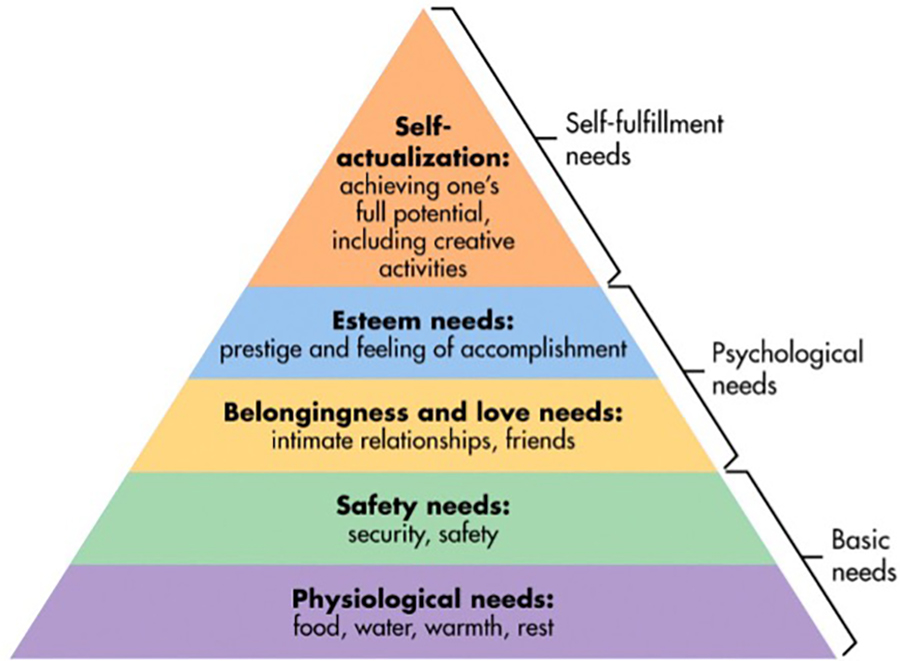
Organizational behavior scholars have produced a vast body of literature describing motivation in the workplace. The purpose of this article is to provide an overview of two classic theories of employee motivation, Abraham Maslow’s hierarchy of needs and Frederick Herzberg’s two-factor theory, and explore practical applications of these theories for managing and motivating a diverse workforce.
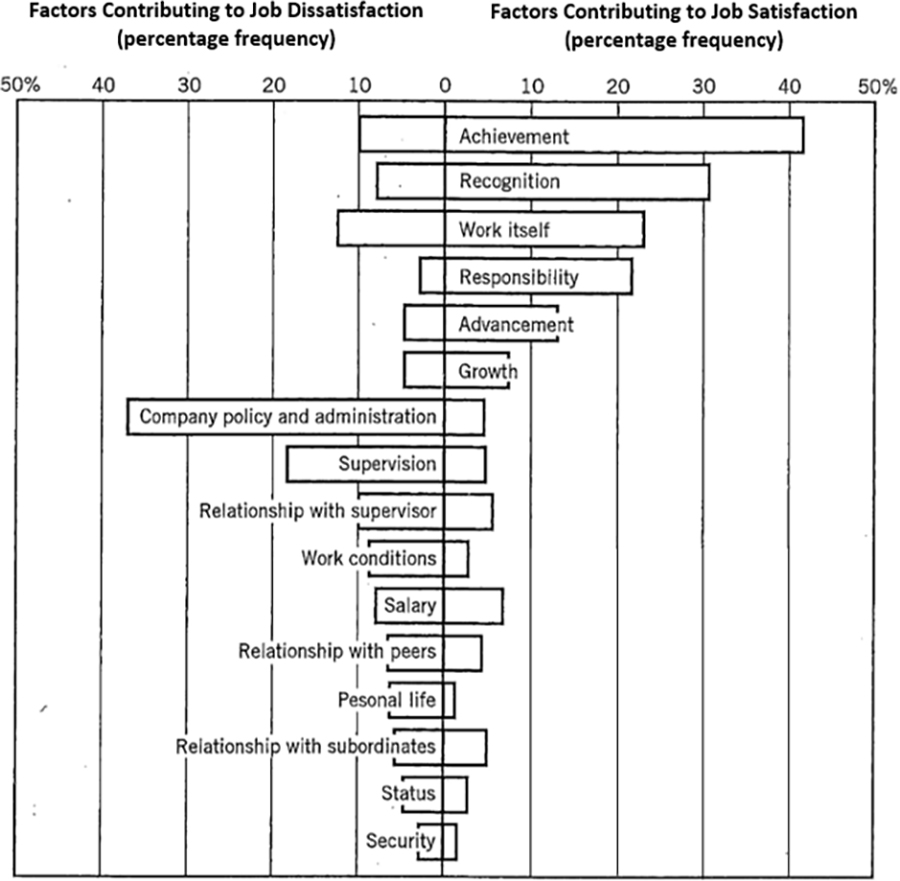
In the late 1960’s, Frederick Herzberg introduced his two-factor theory of workplace motivation. Herzberg proposed that the factors that make a job unsatisfying are different career experiences from the factors that make a job satisfying and motivating. Herzberg’s research is represented in the illustration below, with factors that lead to job dissatisfaction on the left side of the graph and factors that contribute to job satisfaction and motivation on the right.
Herzberg contended that organizations can increase employee motivation by minimizing dissatisfying job conditions and maximizing satisfying job conditions. For example, some of the potentially dissatisfying conditions shown on the left side of the graph could be minimized by providing flexible hours, a generous vacation policy and competitive compensation. Managers could increase motivating factors, shown on the right side of the graph, by providing employees with interesting work as well as opportunities for recognition and achievement. Herzberg’s research found that these types of career experiences are intrinsically motivating.
As plastics organizations widen their recruiting efforts to access talent from diverse populations, managers may wish to reflect on and possibly modify company policies and norms that might be demotivating for some people. For example, employees who practice religious beliefs that are different than the majority for a particular plastics company might not feel a sense of belonging (a psychological need on Maslow’s hierarchy) if company-sponsored social events are centered around a predominant religion. Female employees working for an organization that tolerates some level of sexist humor may not feel safe and accepted by their peers (basic and psychological needs on Maslow’s hierarchy and job dissatisfiers in Herzberg’s two-factor theory). In this example, the toxic culture could result in low employee motivation even if the female employees are being well paid and have otherwise interesting, fulfilling work. For both of these examples, managers wishing to maximize employee motivation could change company policies and norms to avoid the demotivating working conditions.
Plastics companies that lack diversity in their top management teams may be inadvertently creating the perception that people from diverse backgrounds have limited opportunities for achievement and career advancement. These are self-fulfillment needs on Maslow’s hierarchy and important motivators in Herzberg’s two-factor theory. In this example, company executives wishing to maximize workplace motivation could make efforts to promote employees of diverse backgrounds into management positions. This would demonstrate that opportunities for career advancement are open for people of all backgrounds and demographics, which may increase motivation and job satisfaction for employees seeking to fulfill these higher level needs.
Maslow’s hierarchy of needs and Herzberg’s two-factor theory yield some practical advice for managers of performance plastics companies who wish to maximize employee motivation.
- Implement company policies, procedures and cultural norms that ensure that all employees’ basic, lower-level needs are being met. These include safe working conditions, adequate compensation and fair, professional supervisors.
- Sponsor events and create workplace cultures where employees can meet their mid-level psychological needs including developing workplace friendships and having a sense of belonging.
- Create career experiences for employees that meet their higher level needs including meaningful, interesting work, recognition for performance and opportunities for career growth.
Employees of performance plastics organizations can reflect on these two theories of motivation to better understand how their basic, mid-level and higher-level needs are being met.
- Are any basic needs lacking such as having adequate healthcare benefits or compensation?
- Does the job have opportunities to make workplace friendships and feel a sense of belonging?
- Is the work interesting and are there opportunities for growth and career advancement?
Consider sharing any unmet needs with company management, who may welcome the opportunity to improve working conditions and change company norms to make careers more fulfilling and satisfying.