

SpecialFocus
How to Polish, Maintain and care for Acrylics
Fabrication 101
by Dean Trocke, NOVUS 2 LLC
A

crylics are used in a variety of applications and are very popular in both residential and commercial products. Acrylics are available in vibrant and unique colors, making them more appealing to consumers than glass. Additionally, acrylic products require much less maintenance and care than glass products. Acrylic is a safer, more cost-effective and durable option compared to glass and other plastic materials. It is transparent, shatterproof, easy-to-use and highly versatile, but it is imperative that you know how to clean, polish and repair your acrylic to extend its life.

three bottles from Novus line of plastic polishes

NOVUS Plastic Polishes. Photo courtesy of NOVUS 2 LLC.

Cleaning your acrylics often will help promote longevity and clarity. With acrylic’s versatility, it may be more susceptible to dust, dirt and germs building up on the surface. Whether you are a professional or a DIY enthusiast, you need to maintain and care for your acrylics, keeping in mind that they can be sensitive to certain cleaners. Below are a few best practices for cleaning and maintaining your acrylic sheet.
How to clean acrylics
Depending on the status of your acrylic sheet, you can wipe down or wash the surface using a commercial plastic cleaner or mild soap and water to remove the dirt and debris. For a heavier buildup of dust and dirt, first wash the surface with mild soap, warm water and a soft cloth. Always use a clean, soft, non-abrasive lint-free or microfiber cloth that won’t leave scratches on the surface. Do not use paper towels or a dirty cloth as they are likely to create scratches.

The type of cleaner you select is also very important. Ammonia-based cleaning products can damage acrylic, causing cracks, discoloration, brittleness or crazing. Whether you use mild soap and warm water or an acrylic cleaner, be gentle and wipe with light pressure. Too much pressure can leave scratches behind on the surface. Use a dry cloth to get all water and plastic cleaner off the surface to help prevent streaks. Acrylic cleaners will leave a lustrous shine that resists fogging, repels dust and eliminates static.

Minimizing static electricity
Acrylic is a natural conductor of static electricity and when the protective masking is removed from an acrylic sheet, static electricity will be created. This static electricity encourages more dirt and debris to stick to the material. Mild soap and water alone will not remove static electricity, instead using a plastic cleaner with anti-static properties and a soft cloth is recommended. This will help eliminate the static electricity and reduce dust build-up on the surface.
Removing scratches from acrylics
Before attempting to clean or remove scratches from acrylic, always make sure the plastic is cool to the touch. Use a liberal amount of plastic cleaner to safely remove surface dust and dirt, then test plastic scratch removers for compatibility in a small, inconspicuous area. Some plastics are coated with a thin film which may be damaged by the abrasives in plastic polishes.

After ensuring compatibility with your surface, apply the scratch remover polish liberally to the surface. Using a clean, soft cloth, buff the polish into the surface, keeping the cloth saturated with polish. Greater pressure may be required on deeper scratches. When scratches have been polished out, let the surface dry to a light haze. Using a clean cloth, buff the surface to a slippery glaze using firm, short strokes – this procedure is imperative to achieve the best results. The ideal buffing cloth is clean, nonabrasive, absorbent and lint-free.

If the scratched area is large or badly damaged, a power buffer may be used with the plastic scratch removers. Use a clean wool, cotton or foam bonnet and operate the buffer at a low speed, approximately 1,000 RPM’s, to avoid overheating the plastic. Each polish should be applied with a different, clean bonnet.

How to store acrylic sheets
Acrylic should be stored in a controlled environment because they are sensitive to temperature and humidity changes, which can cause discoloring, warping, cracking or brittleness. To properly store acrylic sheets, keep them in a cool, dry area away from direct sunlight and extreme temperatures above 100 degrees Fahrenheit. Store them in a flat position or vertically at a slight angle in special racks. The protective film should be left on the acrylic sheet until it is ready to be used to prevent scratches.

When handling acrylic sheets, always use clean gloves or other protective gear to prevent fingerprints, smudges or scratches. Avoid sliding or dragging the sheets, as this could cause abrasions.

The following guidance for advanced care of acrylic products was contributed by Displays2Go, a manufacturer and retailer of business displays.
Intensive cleaning & repairing acrylic
A more elaborate and involved way to get your acrylic looking as good as new is to scrape, sand, buff or flame polish the durable plastic. Many manufacturers and designers use these processes for commercial fabrication and custom-made displays. These methods are not for beginners, especially if you’re unsure about damaging your products. However, when done correctly, the finished surface of the acrylic will look almost new. With that in mind, contacting an expert in acrylic fabrication and maintenance is recommended.
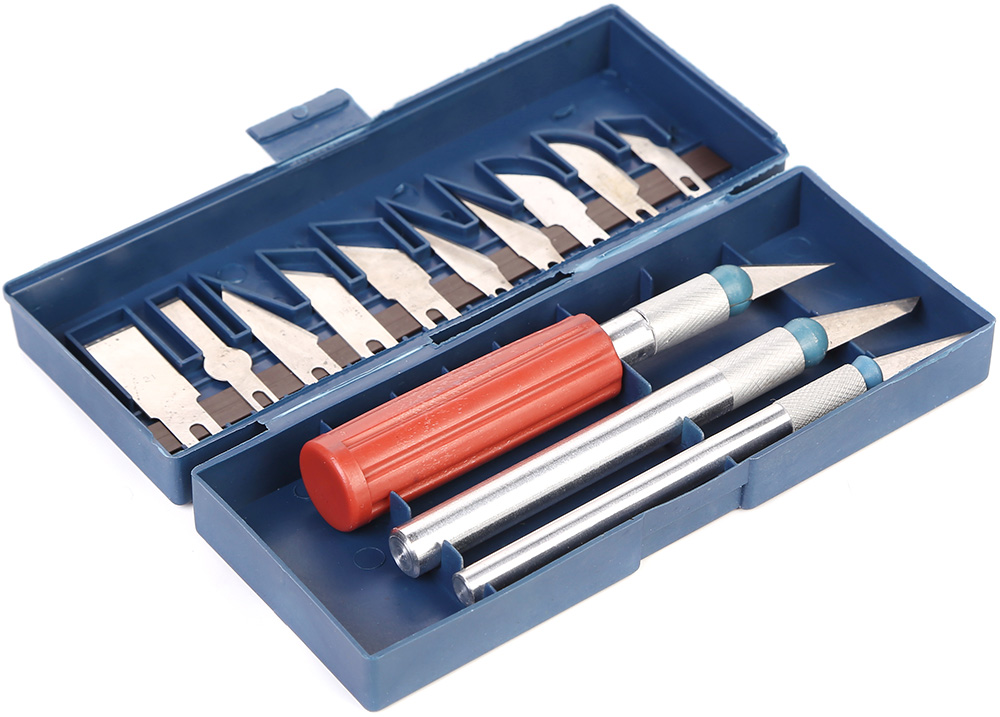
close up of a small plastic case filled with acrylic scraping tools
Acrylic scraping tools.
Scraping
A razor blade or another type of sharp scraping tool can be used to eliminate any machine markings that may be left on the acrylic surface. Move the sharp instrument from side to side, evenly scraping off the excess and scratched acrylic, being careful not to dig into the acrylic. You can avoid digging too deep by angling the tool at 10 degrees. Using the acrylic scraping method is also great for shaping any jagged or uneven edges.
Sanding
Sanding is a technique that will not only remove machining marks, but also produce a matte finish on your acrylic. You can use any form of sander including hand, disc, belt or drum on acrylics. The type of tool you use will depend on the size and surface area of your piece of acrylic.

Sand the acrylic just like you would a piece of wood. Work your way across the surface with a coarser sandpaper first, then move on to a finer sandpaper. For deep scratches, we recommend starting with a 220-grit or 320-grit paper, then moving up to a 600-grit or 800-grit. Use light pressure and keep the sander moving at all times for the best results. This will avoid heat buildup and damage to the acrylic. Always wear a mask when sanding to avoid dust inhalation.
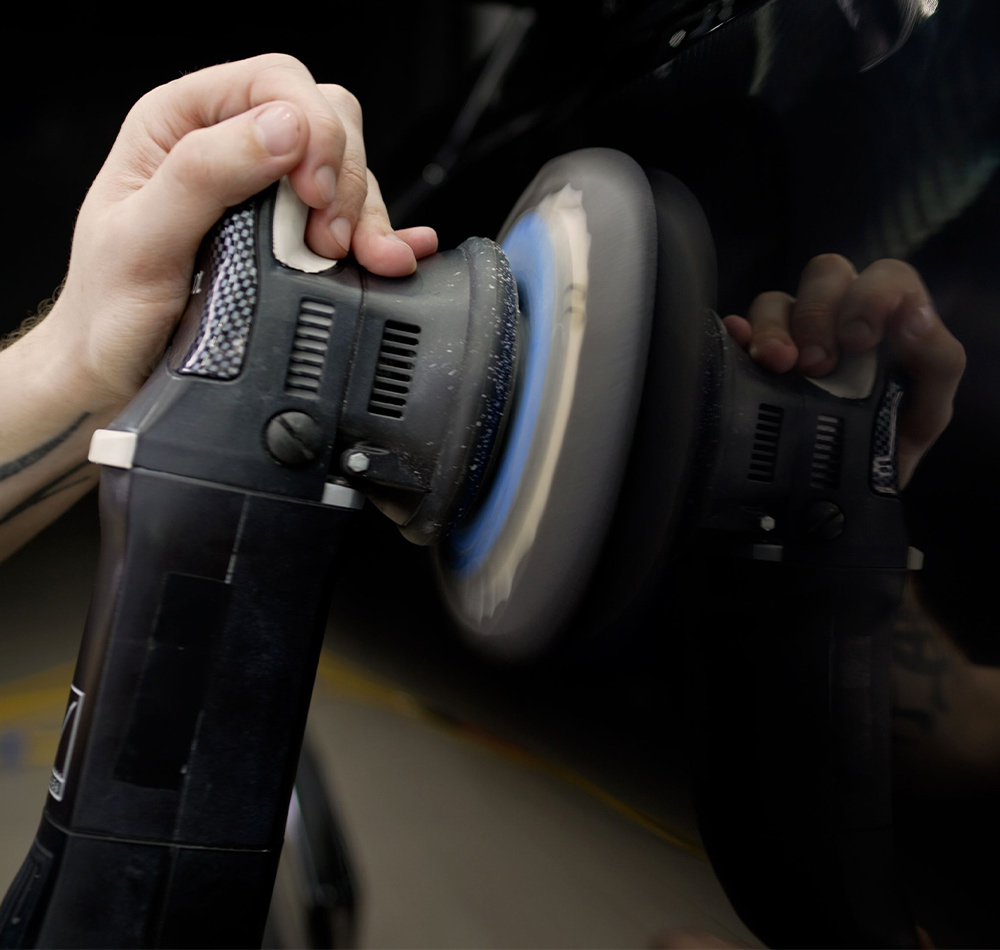
cropped shot of a hand operating an acrylic buffer

Acrylic buffer.

Buffing
Stationary polishing wheels are great for buffing acrylic back to a nice clear finish after it’s been sanded. To make sure you are less likely to overheat the acrylic, use an 8”-14” diameter, 2”-3” wide piece of bleached muslin with bias strips. This will allow the wheel to run much cooler. Make sure you clamp the acrylic in place so that it doesn’t move when buffing.

The finished quality of the acrylic will depend on the type of polish compound you use. A medium cutting compound will result in a glossy finish. A higher luster finish can be achieved by applying a fast-cutting compound followed by a fine compound; this is a longer process, but it will result in the best finish.

Flame polishing

Flame polishing is a technique that can provide a smooth glossy edge on acrylic. Flame polish using a normal hydrogen-oxygen torch with a #4 or #5 tip and gently melt the sanded, buffed, or machined edges of the acrylic. Start by guiding the torch flame across the acrylic edge at a rate of approximately 3” to 4” per second. You want to heat the edges with swift motions.. If the flame moved too slowly or held too close to the surface, stress, crazing, bubbles or melting can occur, ruining the finish. If done right, the edges will have a clean, shiny finish that will make your finished product stand out.

Dean Trocke is the sales manager – plastic polish products at NOVUS 2 LLC. For or more information, contact NOVUS 2 LLC at 650 Pelham Boulevard, Suite 100, St. Paul, MN 55114-1766, USA; by phone at (952) 946-0451; or online at www.novuspolish.com.