

SpecialFocus
Improving Fabrication Efficiency Through Automation:
A Comparison of Hand Fabrication vs. CNC Routing
Fabrication and Machining
by Jeff Grant, National Sales Manager, Hendrick
n the fabrication world, the shift from hand methods to automated CNC routing represents more than a change in tooling. It marks a transformation in how goods are produced, with critical implications for efficiency, quality and profitability. As market pressures mount for shorter lead times and flawless execution, distributors and fabricators alike are evaluating how automation technology can augment or replace traditional practices.
This article compares hand fabrication techniques with CNC routing automation, highlighting where each excels and why many progressive shops are investing in routers like those built by Hendrick Manufacturing.
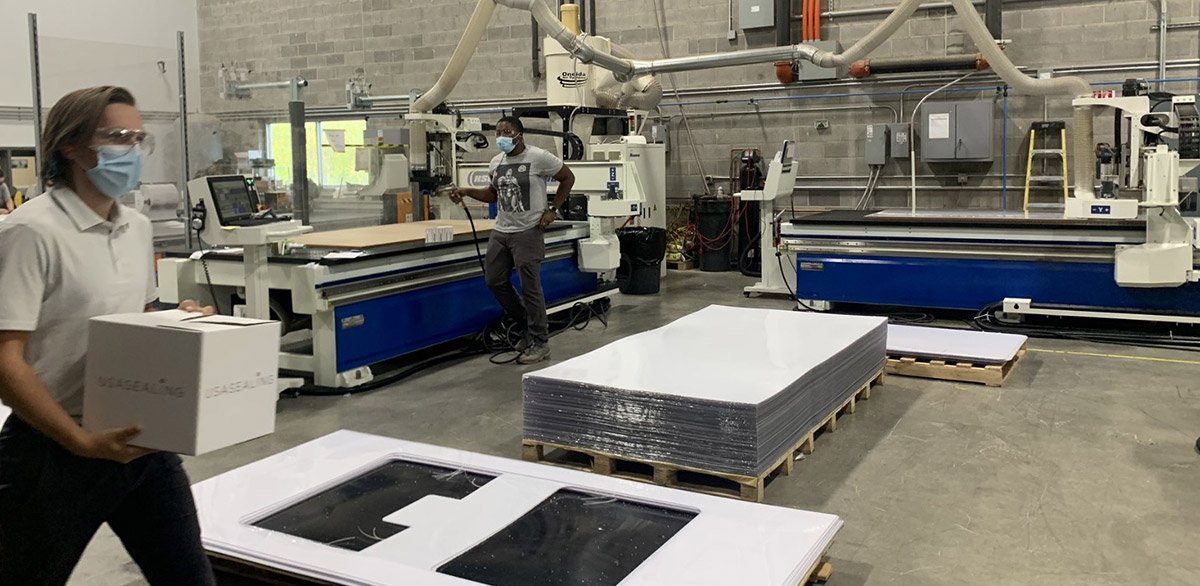
Historically, hand fabrication has been the backbone of many small- to medium-production environments. Operators use manual tools — portable saws, routers, drills and sanders — to shape, trim and finish components based on drawings or templates. Skilled fabricators can deliver bespoke results, adapt quickly to changing job requirements and execute on-the-fly fixes. However, this flexibility comes with limits:
- Speed constraints: Manual work is inherently slower, especially for complex or repetitive tasks.
- Inconsistency: Even highly experienced operators introduce variability between parts.
- Labor pressures: Skilled labor is costly and often hard to recruit and retain.
- Scale limitations: Output is tied to manpower and subject to fatigue effects.
- Safety concerns: These are mostly alleviated with modern machinery that provides guarding, interlocks and light curtains to keep operators out of dangerous areas and away from cutting tools.
For specialized builds or early prototypes, hand fabrication remains relevant, but it struggles to meet the demands of high-volume, precision-dependent production.
CNC (computer numerical control) routers automate cutting, drilling, profiling and shaping by following digital instructions derived from CAD/CAM files. Routers like Hendrick’s HSR, HLD and HHD series enable fabricators to deliver precise, repeatable parts with far greater efficiency than manual methods.
From 3-axis models capable of handling various plastics, wood, aluminum and engineered materials to 5-axis systems designed for complex 3D surfaces, CNC routers transform the production landscape by:
- Executing intricate tool paths automatically.
- Operating 24/7 with minimal supervision.
- Ensuring repeatable precision from part to part.
These capabilities are especially valuable in high-mix, high-volume environments where speed and accuracy are non-negotiable.
Hand fabrication relies on operator skill, which varies across individuals and shifts. Even the most experienced hand worker can introduce slight deviations that accumulate across a batch.
CNC routers produce identical parts every cycle, guided by precise digital instructions. This eliminates much of the variability inherent in manual processes, making CNC routing ideal for parts that must fit together flawlessly or meet tight tolerances.
Productivity and Throughput
In manual workflows, each operation adds time, especially when operators must switch tools, adjust jigs or re-measure features. CNC routers accelerate production by executing multiple operations (cutting, drilling, profiling) in one continuous program with minimal changeovers.
For example, all Hendrick CNC routers include automatic tool changers and multi-zone vacuum tables that hold material firmly while the machine runs unattended, driving throughput significantly higher than manual methods.

Hand fabrication demands years of skill acquisition and mentorship. CNC routing shifts labor requirements toward programming, machine setup and oversight. Roles that are more scalable and less physically taxing. With proper CAM training, technicians can manage multiple machines and programs, multiplying output potential without proportionately increasing staffing.
Design Complexity
Curved surfaces, deep pockets and intricate geometries can pose challenges for hand tools and jigs. CNC programming accommodates sophisticated tool paths effortlessly, broadening design possibilities while optimizing material usage.
Modern routers, even basic 3-axis machines, can route shapes that would take significantly longer to produce by hand. Advanced 5-axis systems further enable complex 3D machining for products like marine components, automotive parts and molded trim pieces.
While CNC excels in many areas, there are situations where hand fabrication remains advantageous:
- Ultra-low volume or one-off builds.
- Early-stage prototyping with frequent design changes.
- Custom artistic features that rely on tactile adjustments.
In these cases, manual skills allow for adaptability that CNC setup time cannot economically match.
Consider a hypothetical fabrication shop transitioning from strictly hand methods to hybrid processes incorporating CNC routers:
- Pre-automation staff workload: Operators spent extensive time on repetitive cutting, sanding and alignment checks.
- Post-automation output: A single technician now oversees multiple CNC runs while quality is maintained via digital verification.
This shift improves throughput, reduces rework and shifts the shop’s competitive edge toward turnaround speed and product consistency.
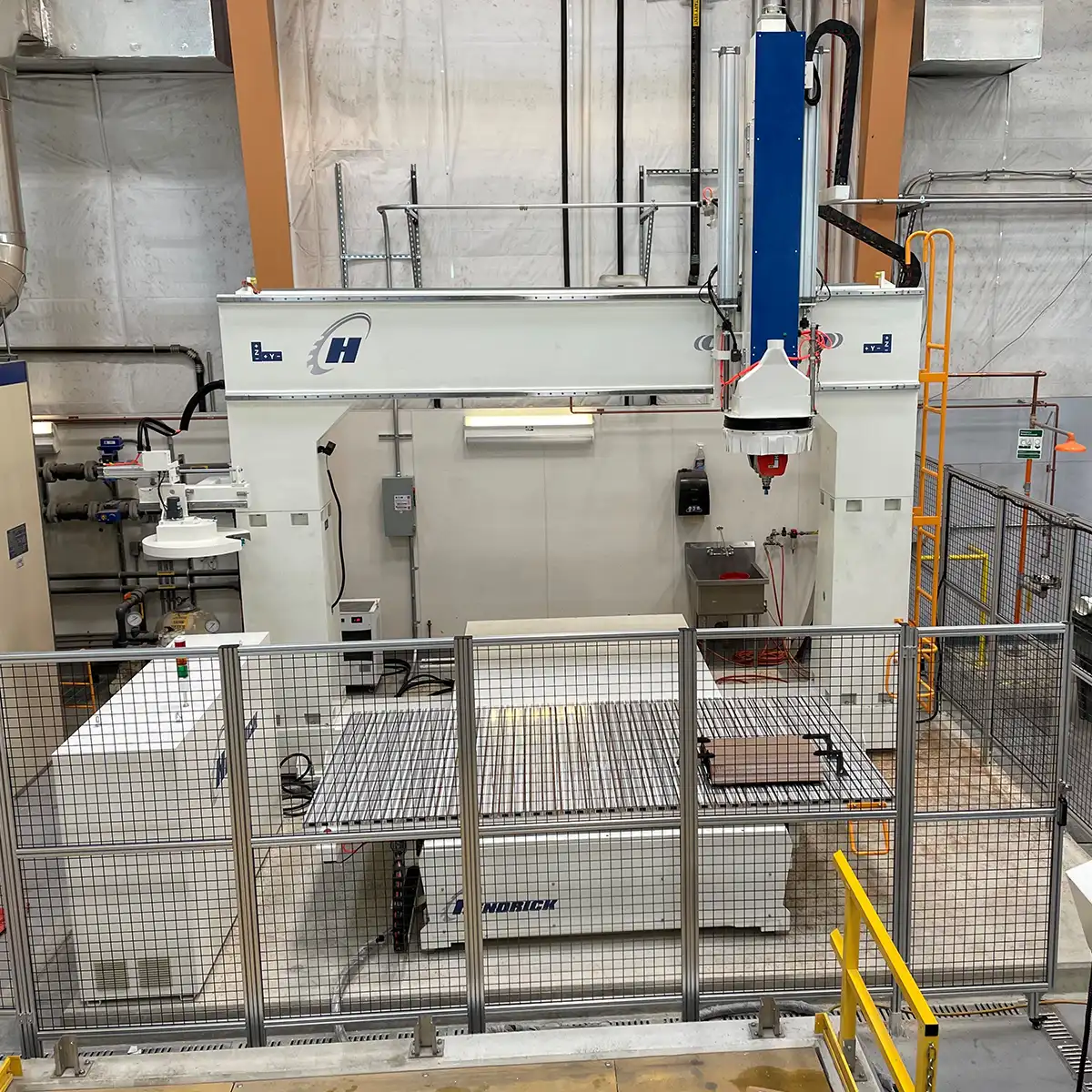
Rather than viewing automation as a replacement for craftsmanship, progressive fabricators view CNC routing as an amplifier of capability. Hand fabrication continues to serve specialized needs, but its scalability is limited compared with automated machining.
By strategically integrating CNC routers into production lines — especially on repeatable, high-volume tasks — shops can:
- Reduce cycle times.
- Improve part accuracy.
- Lower long-term labor costs.
- Expand design and material versatility.
In the competitive landscape of precision fabrication, efficiency gains from automation are a differentiator, enabling distributors and fabricators to meet rising customer expectations while managing costs and maximizing capacity.