

Building Momentum Through Engagement
IAPD President
ne thing I’ve learned over the years is that if people don’t understand what you do, they will fill in the blanks for themselves.
Unfortunately, when it comes to plastics, those blanks are often filled with assumptions. That is one of the reasons advocacy matters so much.
Recently, I joined fellow IAPD members in Washington, D.C., for our annual Performance Plastics Congressional Fly-In. We met with lawmakers and staff from both sides of the aisle to discuss our industry, our products and the important role performance plastics play in the economy.

That distinction matters.
Performance plastics are engineered for durability, longevity and reuse. They are used in applications that help make aircraft lighter, medical devices safer, semiconductor manufacturing more precise or energy systems more efficient. They support critical industries including aerospace, healthcare, energy, semiconductors, clean water and advanced manufacturing.
These are not short-term consumer products. They are essential materials that help power modern life.
Momentum Is Building
One of the most encouraging outcomes of this year’s fly-in was the momentum we are seeing in Washington.
In meeting after meeting, lawmakers and staff demonstrated a growing understanding of the role performance plastics play in the economy. More importantly, they were willing to listen and learn.
None of that happened by accident.
It happened because the association has continued to invest in legislative advocacy, IAPD members have been showing up, telling their stories and helping policymakers understand what performance plastics really are.
Our voice carries weight because it is grounded in real-world experience. We are not speaking in theories or talking points. We are sharing how performance plastics are designed, manufactured, distributed, fabricated and used every day across industries that people depend on.
When policymakers hear directly from companies that create jobs, support local economies and serve critical markets, it changes the conversation.
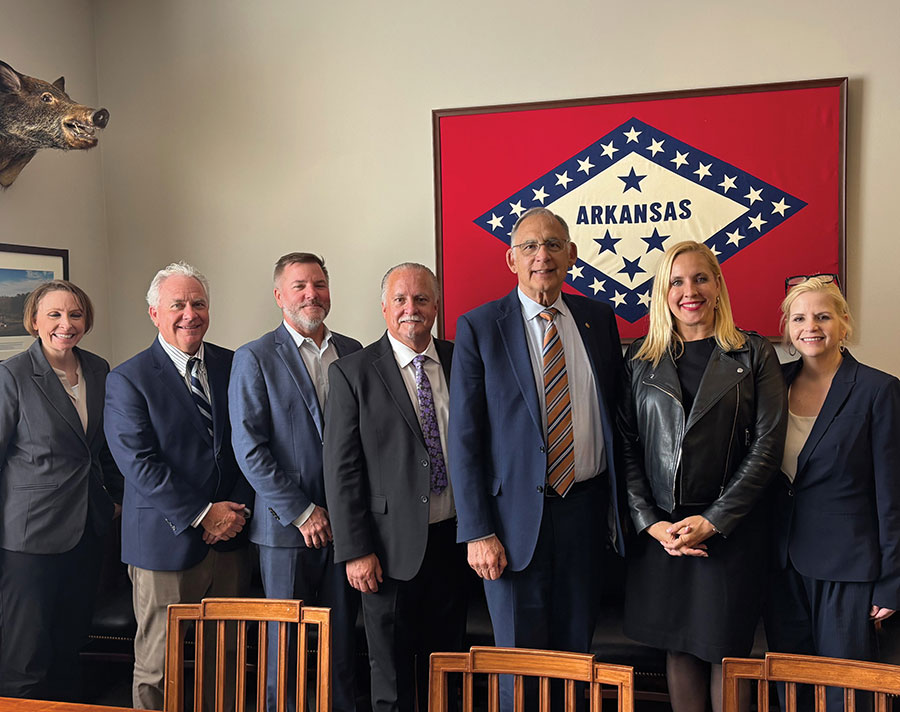
As the only association dedicated exclusively to performance plastics, IAPD brings a unique perspective to policy discussions.
Many organizations represent important segments of the broader plastics industry. Some focus primarily on resin production and chemical manufacturing. Others focus heavily on packaging, consumer products and processing. Those perspectives are important.
But IAPD members occupy a unique place in the plastics ecosystem.
Our members are distributors, fabricators, manufacturers, manufacturers’ representatives and associated products and services companies. We supply materials and solutions that support aerospace, healthcare, semiconductor manufacturing, energy production, water treatment, transportation and countless other industrial applications.
Let’s be honest. When most people hear the word “plastics,” they are not thinking about semiconductor manufacturing, aerospace components or medical devices.
They are usually thinking about consumer packaging.
That is exactly why IAPD’s advocacy work is so important.
One of IAPD’s most important responsibilities is helping policymakers understand that performance plastics are fundamentally different. Without that distinction, legislation intended for one segment of the plastics industry can unintentionally affect another.
During the fly-in, IAPD focused on three themes: credibility, infrastructure and innovation.
First, credibility.
Our industry supports truthful, science-based environmental claims and policies grounded in facts. We all benefit when sustainability discussions are based on measurable outcomes and real-world performance rather than assumptions.
Second, infrastructure.
Recycling systems have not always kept pace with advances in materials and manufacturing. If we want to continue improving circularity, we need investment in recycling infrastructure and stronger domestic supply chains.
That is why IAPD advocates for both mechanical and advanced recycling.
Every once in a while, people try to frame the conversation as if we have to choose between mechanical recycling and advanced recycling. We don’t.
The reality is much simpler than that. We need both.
Mechanical recycling remains the primary recycling method used today and works exceptionally well for many performance plastics materials. Advanced recycling offers a complementary solution for materials that are difficult to recycle through traditional methods.
This is not an either-or proposition.
We need both technologies working together to build a more complete circular system. Supporting one at the expense of the other will not deliver the long-term outcomes our industry, our customers or our environment needs.
Third, innovation.
Innovation has always been one of our industry’s greatest strengths. As new recycling technologies emerge, policymakers need to provide regulatory clarity that allows innovation to move forward while maintaining appropriate oversight. When businesses have certainty, they can invest, grow and create new solutions.
In fact, the vast majority of IAPD member companies have sustainability, recycling or environmental initiatives as part of their operations.
That reality often surprises people.
Performance plastics help reduce weight, improve efficiency, extend product life and reduce emissions across countless applications. They are increasingly being incorporated into circular economy initiatives and recycling programs.
Our industry is not standing on the sidelines waiting for solutions.
We are actively helping create them.

While this article is not intended to be a legislative briefing, it is important to understand why certain policy discussions matter to our members.
National legislative standards for environmental marketing and recycled-content claims help create consistency and reduce confusion. A patchwork of state-by-state regulations makes compliance more difficult and discourages investment.
Investment in mechanical and advanced recycling infrastructure helps expand capacity, improve access to recycling solutions and support greater circularity.
Regulatory clarity surrounding advanced recycling technologies can help encourage innovation while ensuring policymakers understand the difference between manufacturing processes and waste disposal.
These issues may sound technical, but their impact is very real. They influence how companies invest, how products are developed and how effectively our industry can compete in a global economy.
The Power of Telling Our Story
One lesson has become increasingly clear over the years: nothing is more effective than showing people what we do.
I can tell you from experience that some of the best conversations happen when lawmakers walk through a facility and see our industry up close.
It is one thing to read about performance plastics. It is another thing entirely to see how these materials are used to support healthcare, aerospace, clean water or advanced manufacturing.
When legislators visit a manufacturer, distributor or a fabricator facility, they see firsthand the sophistication of our operations, the value of our products and the commitment our companies have made to sustainability, innovation and workforce development.
Facility tours create conversations that cannot happen in a conference room.
They help policymakers understand the difference between performance plastics and the products that often dominate public perception. They provide context. They build relationships.
And they create informed advocates who better understand the role our industry plays in their districts and states.
That is why I encourage every member company to consider hosting legislators and their staff whenever the opportunity arises.
It requires engagement from all of us.
No member company is immune from legislation or regulations that could affect how we operate, what we manufacture or how our products are perceived. The decisions being made today will influence our industry’s ability to innovate, invest and compete for years to come.
That is why your voice matters.
Stay engaged. Participate in advocacy efforts. Share your company’s story. Invite policymakers to visit your facilities. Help them understand the critical role performance plastics play in modern life and the commitment our industry has made to sustainability and innovation.
What we do today to positively influence public policy will help determine our industry’s future success and ability to compete in a global economy.
The good news is that we’re making progress.
Policymakers are listening. More importantly, they’re asking better questions.
That’s usually a sign that understanding is starting to replace assumptions.
IAPD will continue serving as the voice of the performance plastics supply chain in Washington and beyond. But no association can tell this story alone.
The people who make the biggest difference are the people who live it every day.
So, keep showing up. Keep telling your story. Keep opening your doors.
Because what we do today will help determine how our industry is viewed tomorrow.
And that’s a future worth investing in.