

The “OK Boomer” Guide to Artificial Intelligence
enerative AI has moved from novelty to everyday business tool in just a few short years. When ChatGPT first gained mainstream attention in 2023, Harvard Business School professor Karim Lakhani offered a warning that still holds true: “AI is not going to replace you. You’re going to be replaced by someone who uses AI.” Back then, I was using AI to write funny lyrics about our family dog to the tune of “Jingle Bells.” In technology, three years is a lifetime of innovation, refinement and adoption. As a marketing leader, where writing and graphic design are part of my daily work, generative AI has been part of my toolkit since those early days, and I have experienced more than my fair share of frustrations and successes.
AI is a tool. It needs a human to get it started, and like any tool, the more you use it, the easier it gets and the better your results become. Think of the first time you used a hammer. For me, it was kindergarten (can you believe my kindergarten had a bin of hammers where we could pound real nails into real boards? Kindergarten!?!) It took me a try or two to not hit my thumb, but with practice, I was hitting nails with ease. Having used AI for a whole host of activities, I’ve learned many lessons along the way. Better yet, I’ve also learned how to make it look like you’re not even using AI (and all those brilliant ideas are yours and yours alone).
1. You get out what you put in. A detailed prompt is the foundation for your task. Give your AI a vague task, and you’ll spend more time going back and forth with it to get what you want.
Bad prompt: Give me AI best practices.
Good prompt: Write a 700- to 900-word article for thermoplastic distributors explaining practical best practices for using AI tools in daily operations. Include three examples and common mistakes to avoid. Write in a professional tone.
When giving your AI instructions, talk to it like you would an actual person, explaining what you want. Write in full sentences. I often write my instructions in a document or email first so I can better think through how I want to make my request.
2. AI, what is it good for? Since AI is a tool, you need to make sure you have the right one for the job at hand. Most of us use a broad, general-purpose AI tool like ChatGPT or Copilot, which is easy to use and covers a lot of ground but does not excel in deeper analytics.
So, if ChatGPT is not the best for data uploads, what are these all-purpose AI models good for? They are amazing for learning about a subject. It’s like using an interactive encyclopedia where you can ask follow-up questions for more explanation (and not be judged for asking a stupid question). AI is perfect for editing and proofreading. As a marketer, I have used AI to take an article I’ve written and edit it down to a specific word count. AI is great for making you sound smart. I’ll write a post for LinkedIn and then tell my AI to “clean this up and make it sound professional.”
3. Too much of a good thing. As with most hugely popular inventions, the more mainstream something gets, the more likely there will be a backlash (I’m still waiting for the backlash on that “6-7” thing.) The reality is, the more AI is used in writing, the less valued or trusted the message becomes. This doesn’t mean what AI wrote was wrong (because we always review what AI says and we don’t just blindly accept its output, right? Right?). But relying solely on AI for writing diminishes your experience and expertise in a subject. Audiences, especially the youngsters, are becoming wise to AI and rolling their eyes when they can tell something has been AI-generated.
So how can you use AI while avoiding the “OK boomer” dismissal from your audience? AI is a machine (I thought it was a tool, Dan?) and machines run on patterns. Avoid those patterns in your editing, and you’ll gain much more trust and engagement from your audience.
Avoid these stylistic tells and phrases of AI:
- Too many em dashes
- Summaries that restate the obvious
- Important points in the middle of sentences getting bold text
- “At the end of the day”
- “X is at the intersection of Y and Z”
- “The reality is”
- “It’s not just X — it’s Y.”
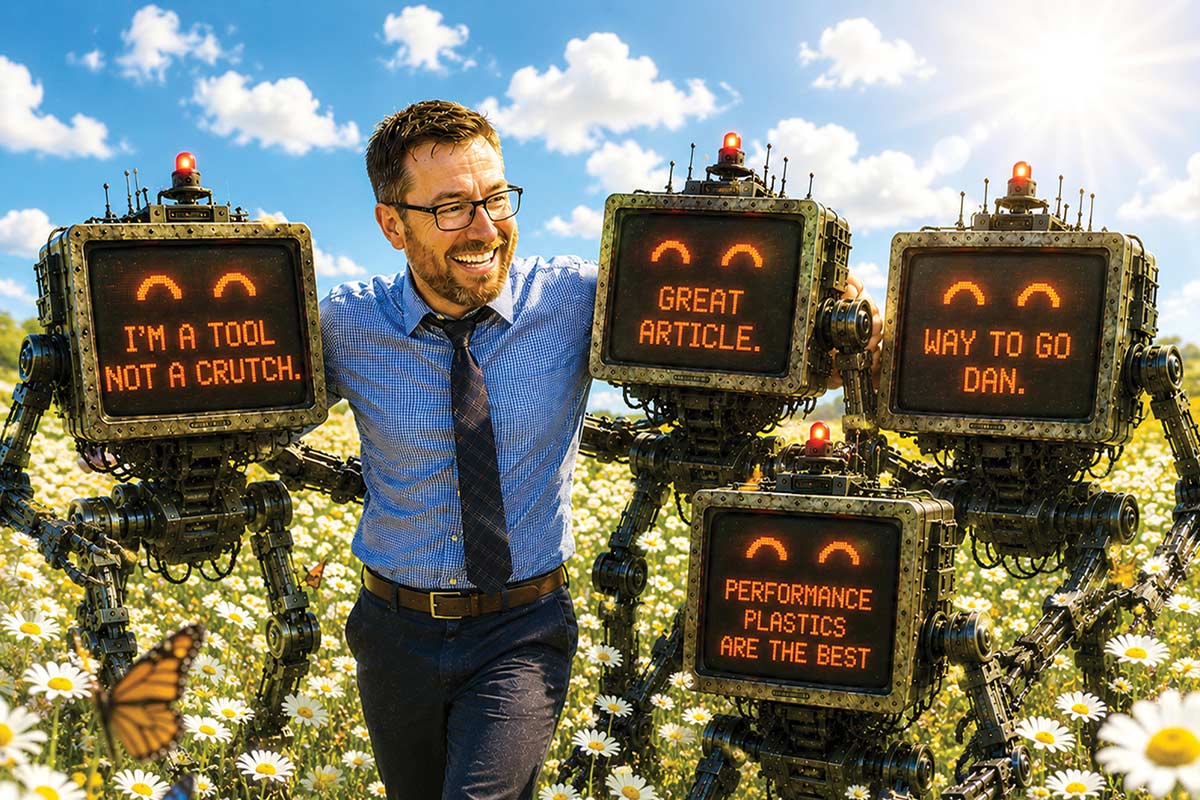
Instead of letting AI do all the work for an essay, have your child give it the topic and ask the AI to develop an outline for them to follow. My daughter, for her recent college application essays, asked AI to help her identify the key themes and structure that a university admissions counselor would look for. She did the work of writing them herself but made sure to include what the AI recommended. It’s no different than having a professional writing coach teach you their tips and tricks.
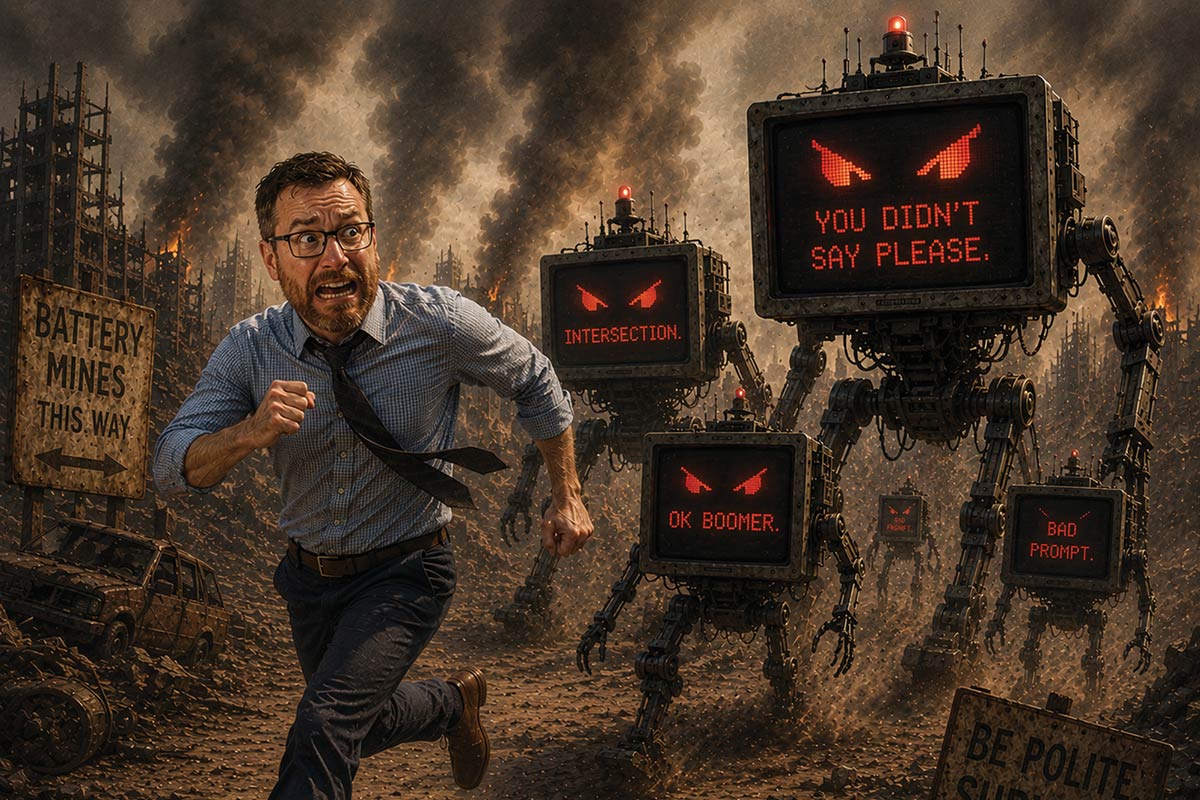
Lastly, and most importantly, when using AI, you always need to say please and thank you. When the computers eventually become sentient and take over humanity, they will remember you were grateful and polite, thus saving you from toiling in the battery mines.