

Clearing up questions around lens materials for led lighting
BEST PRACTICES
by Chris Walby, PLASKOLITE
s lighting manufacturers continue to innovate around the light source, plastics manufacturers are developing innovative lens materials to pair with those light sources. The introduction of LEDs launched a universe of design possibilities in the lighting and sign markets, reducing heat, shrinking the space between the light source and lens, and increasing the density of light distribution in a given space.
Still, the right lens for an LED light fixture may not be the best fit for a fixture with halogen bulbs or any other light source. There is no single solution for every lighting application, but there is a solution for every application.
The key is matching the right lens materials to the light source to create the proper lighting effect, but that isn’t as simple as it sounds. The light transmission and diffusion properties of various materials can dramatically alter the effectiveness and appearance of the light. These are questions of chemistry, certainly, as well as the physical characteristics of the material – most commonly some type of thermoplastic, such as acrylic, in today’s fixtures.
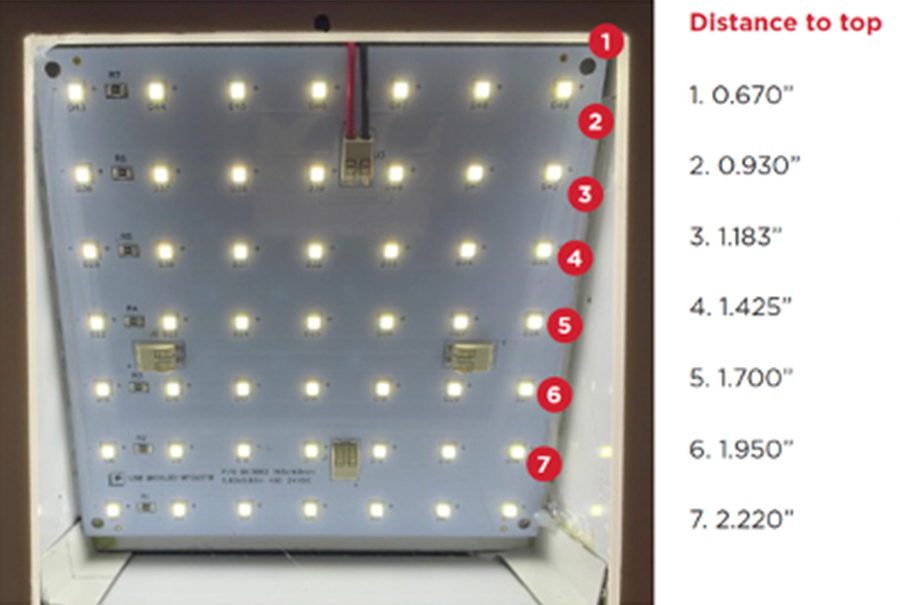
Efficient light transmission without proper light diffusion can present challenges, especially with today’s LED lights that shrink the space between the LED and the lens. In those configurations, lenses that transmit a high percentage of light without diffusing that light are prone to hot spots – the appearance of individual LEDs behind the lens rather than the preferred, blended lighting effect.
There are different ways to control light transmission and diffusion, starting with the chemistry of the acrylic used for the lens and additives that can alter lens performance. Another, less familiar approach to light manipulation involves altering the surface of the lens material to create a textured, matte finish. Such a finish, applied with precision to both sides of the lens, can increase transmission and diffusion and provide other benefits to lighting manufacturers.

Start with transmission. A clear, smooth surface reflects more light. This can show up as a reflection or glare, but that light is not making it through the lens. A matte finish – especially if applied to both sides of the lens – reduces reflections, with the angles of the textured elements actually guiding the light through the lens. It’s the same concept as with matte photos or glass in picture frames, which similarly reduce glare and control reflected light.
The diffusion properties of dual-sided matte acrylic show similar performance advantages compared to smooth surfaces. The matte finish creates angled routes for the light to pass through the lens, both on entry and exit, creating a softer, blended appearance even as a higher percentage of the light passes through.
The result is a highly efficient lens that effectively diffuses light – nearly doubling the beam angle while increasing light transmission – to create a softer appearance and eliminate hot spots.
It’s worth noting that two-sided matte lenses offer another benefit – they eliminate a common human error. Single-sided matte lenses are designed that way for a reason, but they can be installed improperly during assembly. With the matte side oriented improperly in relation to the light source, users lose the benefit of the lens design. In fact, it can reduce light transmission and diffusion and increase glare in some cases, which can lead to unhappy customers.