

by Susan Avery, CAE
IAPD CEO
ears ago, one of my association mentors gave me a piece of advice that has stayed with me throughout my career.
When your board is wrestling with big questions about the future of the organization, don’t wait until every answer has been decided before you tell your members about them. Tell your members the questions while you are asking them.
That’s transparency.
So, as we prepare to gather in Atlanta for IAPD’s 70th Annual Convention + connecX, I want to share some of the big questions your IAPD Board of Directors, Executive Committee, committees, task forces and staff are asking about the future of IAPD.
They are not small questions.
What should IAPD look like five years from now?
What does it mean to be a highly engaged member company?
Are we measuring success by how many companies belong to IAPD, or should we also be measuring how deeply IAPD is embedded within those companies?
How do we develop relationships with the next generation of leaders before the industry leaders who built their careers with IAPD retire?
Which programs should we continue investing in? Which should we fundamentally rethink? And what should we be willing to stop doing?
How should our annual convention evolve as the way our members conduct business changes?
What should a trade magazine become when its readers need market intelligence and business context alongside technical knowledge?
And perhaps the biggest question of all:
What could we accomplish if we mobilized the collective power of the performance plastics industry?
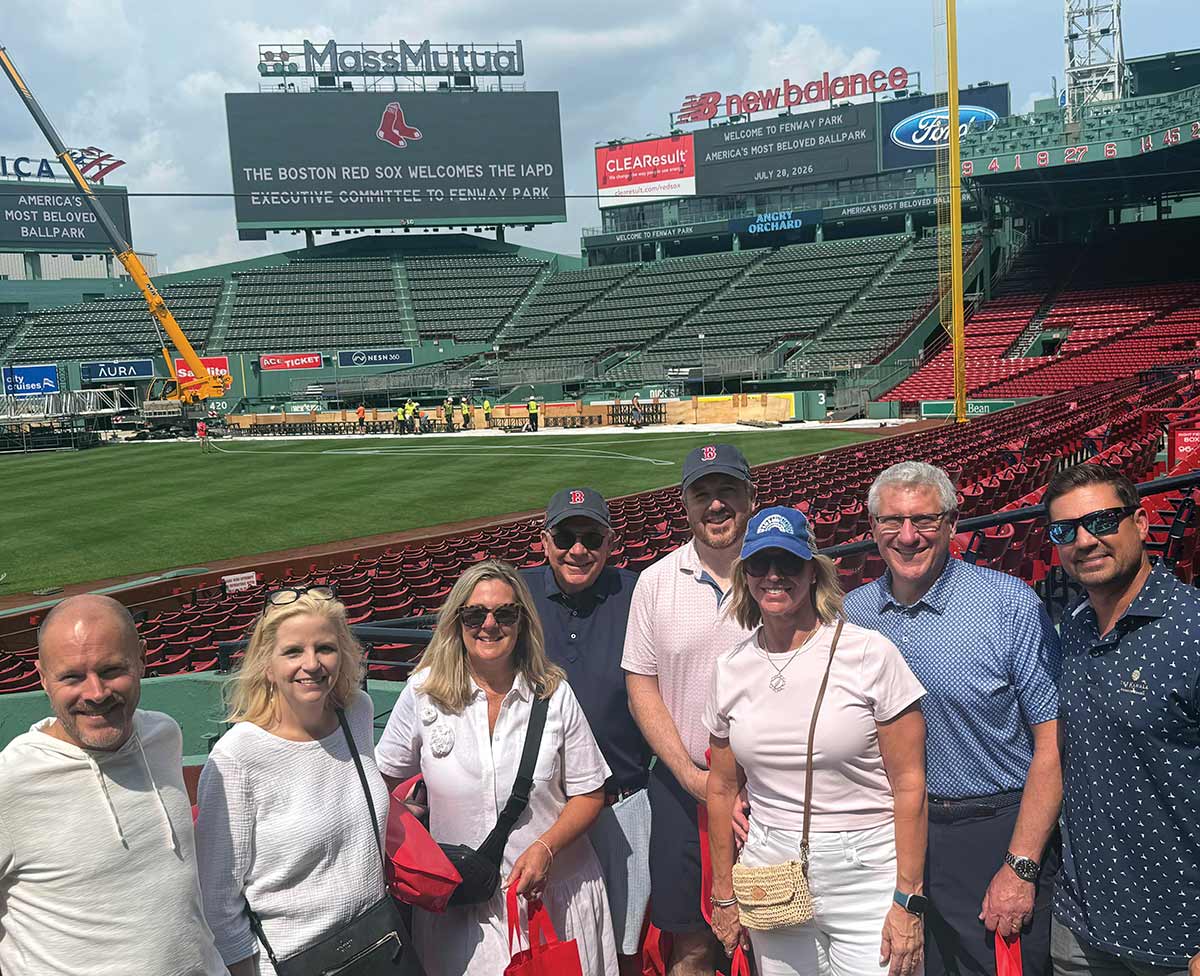
What began as an examination of membership trends grew into something much larger.
We listened to members. We studied years of member engagement, program and convention data. We examined why companies join, participate and sometimes leave. We conducted the Relevance Discovery Workshop at our Leadership Development Conference. We looked at participation across programs and membership segments. We studied how consolidation, private equity, leaner organizations, workforce pressures, artificial intelligence, specialization and changing expectations for return on investment are affecting our industry.
Eventually, we realized we had enough data. In fact, at times we had so much information that we risked “analysis paralysis.”
The question was no longer, “What else do we need to learn?”
It was, “What are we going to do with what we have learned?”
Importantly, this work has not told us that IAPD’s strategic direction is wrong.
Our Three Pillars of Grow & Advocate, Knowledge & Capability and Distribution Channel remain the foundation of IAPD’s strategy. They call on us to grow and advocate for the performance plastics industry, improve the knowledge and capabilities of our members and strengthen the performance plastics distribution supply chain.
What we are examining now is how we deliver on those commitments in an industry that is changing around us.
In many cases, the question is how we preserve what works while making room for what members need next.
Take the IAPD Annual Convention.
Business development has always been at its heart, and today private supplier meetings provide tremendous value to many of our manufacturers and distributors. We don’t want to diminish that. At the same time, as more business takes place behind closed doors, we have to ask how we ensure that the convention remains something more than a collection of meetings taking place in the same hotel.
How do we make it the gathering place for the performance plastics industry?
How do we create more opportunities to meet someone new, exchange ideas and discover an emerging market or application?
How do we bring more community and fun back into the experience?
How do we create opportunities for the unexpected conversation over breakfast, in a hallway or at a reception that can turn into a business relationship lasting decades?
And how do we make the convention a place where we don’t just conduct the business of performance plastics, but celebrate performance plastics: our people, our innovations, our applications and the big ideas moving this industry forward?
You will begin to see some of that thinking in Atlanta this year, with much more to come as we look toward 2027 and beyond.
IAPD has tremendous technical knowledge and subject matter expertise. How do we preserve that strength while making education more accessible to employees who cannot leave their businesses for several days of training?
Could the IAPD University evolve from a collection of courses and webinars into a year-round learning ecosystem? Could shorter microlearning modules allow an employee to learn about a particular material or application when they need that knowledge? Could member companies eventually incorporate IAPD resources into their own employee development programs?
The question isn’t simply how many courses IAPD can offer.
It is how IAPD can become a stronger partner in developing the people who will lead this industry in the future.
Our research reaffirmed that Performance Plastics is one of IAPD’s most valued member benefits. Its technical and application-focused content is a strength we intend to preserve.
But we learned something else.
Nearly three-quarters of our readers work in sales and business development or executive leadership.
That caused us to ask: What else do those readers need?
How can we surround excellent technical application content with greater market context? Could we provide more intelligence about emerging markets and growth opportunities? More economic and business insight? More coverage of artificial intelligence, automation and other technologies changing our companies? More voices from industry leaders? More stories about the people behind this industry?
And how can print, digital content, video and other formats work together rather than operating as separate communications channels?
The Editorial Committee is beginning that work now, and you will see the evolution of Performance Plastics begin to take shape in 2027.
Consider this your sneak peek.
“What is IAPD doing to promote performance plastics?”
It is a fair question. But perhaps we need to ask it differently.
What could all of us do to promote performance plastics?
IAPD is a relatively small association. We cannot independently reach every engineer, customer, student, educator, policymaker, veteran, job seeker or community that needs to understand this industry.
Collectively, our members can.
Hundreds of IAPD member companies interact every day with thousands of customers, employees, engineers, designers, suppliers, educators, students, elected officials and community leaders.
That collective reach dwarfs anything IAPD could achieve on its own.
So perhaps IAPD’s greatest opportunity isn’t to become the industry’s marketer.
Perhaps it is to become the industry’s facilitator.
We can bring members together. We can hire experts. We can conduct research and develop credible, science-based messaging. We can create videos, graphics, application stories, social media campaigns, email content and other resources.
Then we can help mobilize our members to carry those messages farther than IAPD ever could alone.
Imagine what that could mean.
We could introduce far more people to careers in this tremendous industry and show students, skilled tradespeople, veterans and career changers that performance plastics offers rewarding careers they may never have considered.
We could tell a stronger sustainability story. We could show how performance plastics contribute to longer product life, reduced maintenance, lighter weight, energy efficiency and countless other environmental benefits. And we could highlight the extraordinary environmental stewardship already taking place inside our member companies.
We could tell the stories of the remarkable applications of performance plastics, from health care and semiconductor manufacturing to aerospace, water infrastructure, transportation, energy and advanced manufacturing.
One national campaign created by IAPD could become hundreds of campaigns amplified by member companies through their own social media, email, customer communications and community outreach.
IAPD can create the platform and the messaging. Our members create the reach.
Our members consistently tell us that advocacy is one of IAPD’s most important responsibilities. Yet participation in our advocacy efforts remains concentrated among a relatively small group of companies.
We need to change that.
IAPD and our government affairs experts can monitor legislation, develop policy positions, provide talking points, arrange meetings and help members understand the issues.
But we cannot replace the voice of a business leader talking directly with their own member of Congress.
Imagine the strength of our industry’s voice if more IAPD members developed and nurtured relationships with their legislators before we needed to ask them for something.
Imagine more legislators visiting member facilities and seeing firsthand the people they employ, the technologies they use and the products they make.
Imagine hundreds of industry leaders prepared to explain why performance plastics matter to American manufacturing, infrastructure, health care, transportation, technology and the economy.
Our role is to make that engagement easier.
But ultimately, the industry’s most powerful advocates are the people who live and work in it every day.
We are also examining how we onboard new members, how we engage more people inside existing member companies, how our committees and volunteer structure should evolve and, yes, which things IAPD may need to stop doing.
Because we cannot simply add every good new idea on top of everything we have always done.
Our Executive Committee and Board are working through these questions now and building the strategic framework that will guide IAPD’s next chapter. Some initiatives are already underway. Others are being developed. Some ideas will change as members, committees and our Board continue to work through them.
That is exactly why I wanted to share them with you now.
Transparency isn’t telling members what leadership decided after every decision has been made.
It is inviting members into the conversation while the important questions are still being considered.
In a few weeks, many of us will gather in Atlanta for our 70th Annual Convention. You will see some of these ideas beginning to take shape. You will also get a first look at PerformancePlastics.org, our new public-facing platform designed to help tell the story of performance plastics to audiences beyond our traditional membership.
But more importantly, I hope you will come ready to talk with us. Tell your Board members what you think. Talk with our Executive Committee. Talk with our staff and volunteer leaders.
And when you see me in Atlanta, tell me:
What does IAPD need to become to help your company succeed and to help this industry thrive for the next generation?
We are asking the big questions.
And we want our members helping us answer them.