

Performance Plastics in Food & Beverage: Where Compliance, Performance, and Sustainability Converge
he food and beverage industry operates at the intersection of some of today’s most complex sustainability challenges. Unlike many industrial sectors, its products are fundamentally dependent on natural systems land, water, biodiversity, and climate stability. This creates a unique pressure: the industry must not only minimize environmental impact but also preserve the very ecosystems that enable long-term food production.
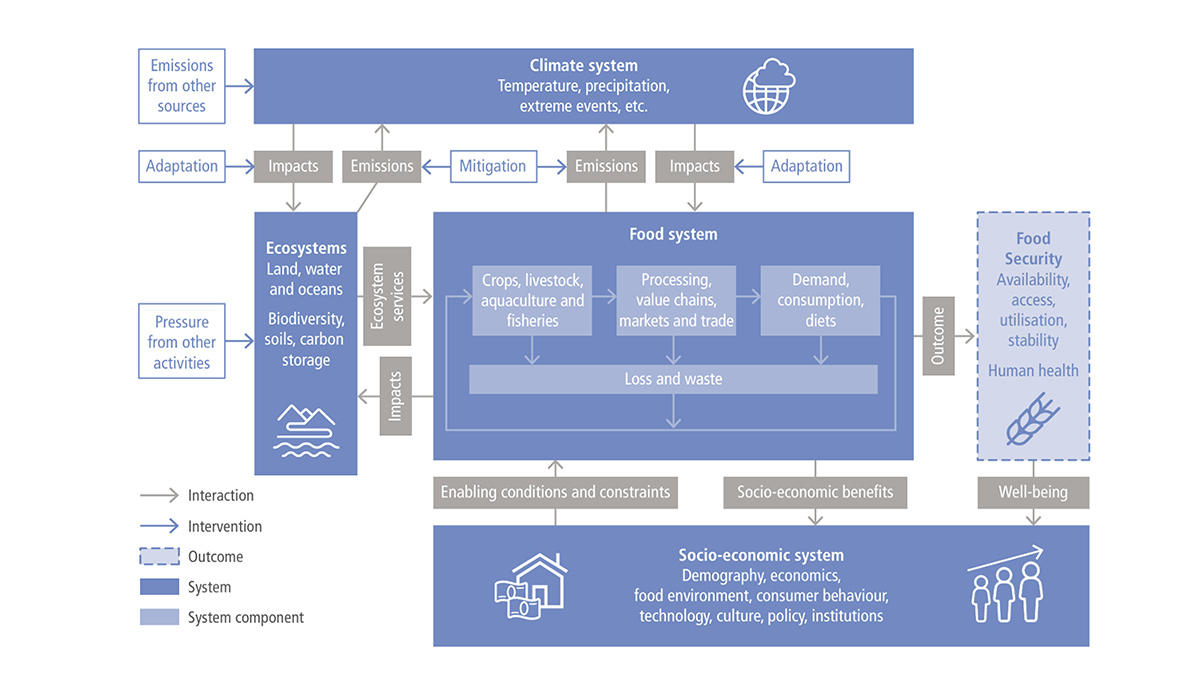
As illustrated in the 2019 Intergovernmental Panel on Climate Change (IPCC) Special Report on Climate Change and Land, food systems exist within an interconnected web of land use, water availability, climate change, ecosystem health, and food security. Disruption in any one of these systems can cascade across the entire value chain, affecting agricultural yields, ingredient sourcing, energy demand, operational costs, and supply reliability (IPCC).
In this environment, sustainability is no longer an abstract corporate goal. It is increasingly tied to business continuity and operational resilience.
At the same time, food and beverage manufacturers face intense day-to-day operational demands. If a conveyor component wears prematurely, a washdown system corrodes, or a fabricated part fails unexpectedly, the consequences extend well beyond maintenance costs. Unplanned downtime can interrupt production, compromise sanitation protocols, increase waste, and create compliance risk.
As a result, material selection has evolved from a straightforward engineering decision into a multi-variable challenge involving performance, hygiene, regulatory compliance, and environmental impact.
Performance plastics are increasingly central to solving that challenge.
Materials used in these environments must perform reliably without introducing contamination risk or requiring excessive maintenance. Engineered thermoplastics such as HDPE and polypropylene are widely used because they offer strong corrosion resistance, chemical durability, and cleanability under washdown conditions. HDPE sheet, for example, is commonly used in conveyor components, cutting surfaces, and fabricated wear parts where hygiene and wear resistance are critical (SIMONA America Group).
Similarly, polypropylene sheet materials are frequently selected for tanks, fluid handling systems, containment structures, and chemical processing applications where long-term resistance to aggressive cleaning agents is essential (SIMONA America Group).
These applications directly affect uptime, maintenance cycles, and production continuity. Reduced corrosion and longer service life can translate into fewer replacements, fewer shutdowns and more predictable operating performance.
Since 2020, supply chain disruptions, climate events, and global trade concerns the industry has incorporated the ever changing regulatory landscape into their everyday business decisions (Nature Conservancy 2020)
Food contact safety requirements, sanitation standards, and contamination prevention protocols continue to evolve under regulatory agencies such as the U.S. Food and Drug Administration and through food safety frameworks such as Hazard Analysis Critical Control Point (HACCP) programs (FDA 2026).
At the same time, environmental regulation is expanding rapidly. Extended Producer Responsibility (EPR) legislation, packaging waste reduction mandates, recycled-content requirements, and climate-related disclosure frameworks are changing how manufacturers evaluate materials across the product lifecycle. Global frameworks such as the Corporate Sustainability Reporting Directive (CSRD), along with increasing Scope 3 emissions reporting expectations, are also pushing organizations to better understand material-related environmental impacts.
This means material selection is no longer driven solely by cost or mechanical performance. It increasingly requires balancing food safety, regulatory compliance, operational reliability, and sustainability objectives simultaneously.
Focusing on the circular economy, especially regarding packaging and single-use plastics, has also become a significant priority for companies in the food and beverage industry. Keurig Dr Pepper, for example, tracks measurable commitments related to packaging recyclability, post-consumer recycled content, virgin plastic reduction and manufacturing waste diversion as part of its broader sustainability strategy (Keurig Dr Pepper 2026).
Rather than evaluating materials only by upfront cost or immediate performance, organizations are increasingly assessing total environmental and operational impact over the full-service life of a component.
Beyond single use plastic the goal for circular economy perspective often changes how performance plastics are evaluated.
A material that lasts longer, reduces maintenance frequency, or prevents contamination-related waste may deliver significant lifecycle benefits even when its initial footprint appears higher than alternatives. Reduced replacements can lower material consumption, decrease labor requirements, minimize downtime, and reduce associated energy use.
Lifecycle-based resource efficiency is widely recognized as a core component of sustainable materials management (EPA 2026). This is especially relevant in food and beverage environments, where durability becomes more than an engineering advantage, it becomes a sustainability lever.
In food and beverage systems, circularity must be approached more holistically.
Because many food-contact applications face strict regulatory constraints, incorporating recycled content is not always practical or permitted. However, circular economy principles still provide meaningful pathways for improvement.
Circularity can take many forms, including:
- extending component service life
- reducing material waste through optimized design
- improving fabrication yield
- enabling part replacement instead of full system replacement
- recovering scrap in non-food-contact applications
In many industrial systems, keeping materials in productive use longer can provide substantial environmental benefits. Circular economy frameworks consistently identify durability, reuse, and material efficiency as critical strategies for reducing resource demand and waste generation (Ellen MacArthur Foundation 2026; OECD 2022).
For food and beverage manufacturers, circularity often begins with designing systems that reduce waste at the source.
Engineers, processors, OEMs, and material suppliers all influence operational outcomes that affect energy use, waste generation, maintenance requirements, labor efficiency, and risk exposure.
When a material reduces downtime, extends maintenance intervals, or improves sanitation reliability, its impact extends beyond the component itself. It influences the efficiency and resilience of the entire production system.
This is where performance plastics often deliver their greatest value and not by eliminating tradeoffs but by helping manufacturers manage them more effectively.
Performance plastics are increasingly part of the answer because they can help bridge performance, compliance, and sustainability objectives.
The most meaningful progress in food and beverage manufacturing will not come from choosing between operational performance and environmental responsibility. It will come from designing systems where reliability, regulatory compliance, and circular resource use reinforce one another.
That is where the next generation of opportunity lies.
Ellen MacArthur Foundation. “Circular Economy for Plastics.” 2026. ellenmacarthurfoundation.org
U.S. Environmental Protection Agency. “Sustainable Materials Management.” 2026.epa.gov/smm U.S. Food and Drug Administration. “Food Contact Substances (FCS).” 2026. fda.gov/food/packaging-food-contact-substances-fcs
Keurig Dr Pepper. 2025 Impact Report. 2026.
McKinsey & Company. “Packaging, Plastics, and Sustainability Insights.” 2023. mckinsey.com/industries/packaging-and-paper/our-insights
The Nature Conservancy. “The Food Industry Is Leaning Into Sustainability.” [Year].
Novolyze. “An Overview of Sustainability Initiatives in the Food & Beverage Industry.” [Year].
Organisation for Economic Co-operation and Development. Global Plastics Outlook. 2022. oecd.org/environment/plastics/plastics-outlook
SIMONA America Group. Internal product and application information. 2026.